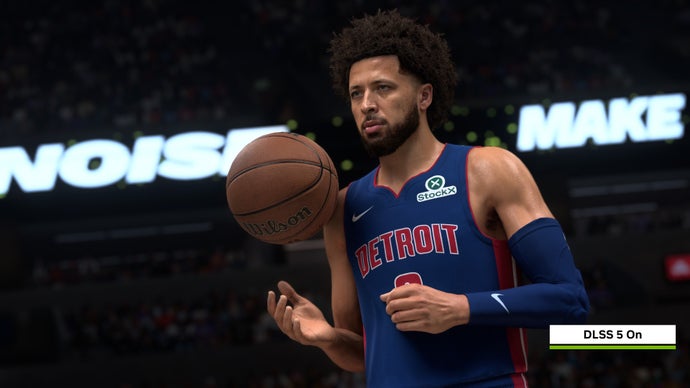
Nvidia's DLSS 5 launches this week with NBA 2K27, bringing the company's latest AI-powered upscaling technology to PC gaming. The new version introduces neural rendering capabilities that apply machine learning to enhance character appearances and visual fidelity in real time.
The feature has already generated controversy before its official release. Modders extracted DLSS 5 files from NBA 2K27 last week and exposed what players are calling the "yassification filter," an AI beautification layer that dramatically alters character models. Early demos showed the filter smoothing faces, enhancing features, and applying what many describe as Instagram-style cosmetic enhancements to in-game characters. The filter proved so aggressive that it became a meme across gaming communities, with comparisons to other notorious AI face modifications.
Nvidia revealed DLSS 5 earlier this year alongside the promise of more natural visual rendering. The company positioned the technology as a leap forward from DLSS 4, which focused on frame generation and supersampling. DLSS 5 extends Nvidia's AI toolkit by applying neural networks to character and environmental rendering, theoretically allowing developers to reduce art workload while maintaining visual quality. However, the execution has sparked debate about whether these AI enhancements actually improve games or simply push an algorithmic aesthetic that doesn't align with artistic intent.
The NBA 2K27 launch marks the first major test of this technology at scale. Visual Concepts, the studio behind 2K Sports' flagship basketball franchise, opted into DLSS 5 early, making the game the flagship showcase for this new capability. NBA 2K27 released on September 6, 2024, across PlayStation 5, Xbox Series X/S, and PC. The DLSS 5 version specifically targets PC players with compatible Nvidia GeForce RTX graphics cards, primarily RTX 40-series and newer hardware.
The timing creates an awkward spotlight. NBA 2K27 already drew scrutiny for its player likenesses and cosmetic monetization. Adding an AI filter that automatically "beautifies" real athlete likenesses introduces fresh questions about authenticity and whether players consented to algorithmic alteration of their digital representations. Some players reported the filter made recognized athletes appear nearly unrecognizable, raising concerns about whether this benefits the game or undermines it.
This controversy matters because DLSS 5 represents Nvidia's push into generative AI within gaming infrastructure. If developers embrace the technology uncritically, it could become standard across PC games. Conversely, if player backlash intensifies, Nvidia and Visual Concepts may face pressure to make the filter optional or disable it entirely.
The technical achievement remains solid. DLSS 5 neural rendering does deliver genuine performance gains and visual enhancements in controlled testing. The underlying technology works. But the application here highlights a broader tension in gaming: just because AI can modify something doesn't mean it should, especially when that something involves representations of real people. NBA 2K27 becomes the test case for whether this technology enhances or distracts from the core experience.