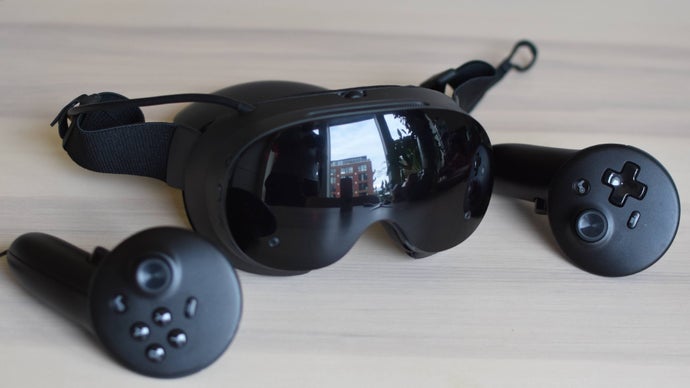
Valve's Steam Frame VR headset launches into a market that barely exists anymore. The device represents best-in-class hardware engineering, but it arrives at a moment when the VR industry itself faces an identity crisis.
The Steam Frame ships with top-tier specs and controller design. It delivers the technical performance Valve promises. Reviewers confirm the headset performs at or above competitors like Meta Quest Pro and HTC Vive Focus Ultra. The controllers ship polished and responsive. Display clarity and refresh rates hit expected marks for the price tier.
But specs alone cannot solve the Steam Frame's core problem: the game library has evaporated. VR studios stopped shipping original titles years ago. Publishers shelved VR projects. The flow of meaningful software dried to almost nothing. Players who own VR headsets now recycle old ports and indie experiments rather than experience fresh, ambitious games built for the platform. A headset is only as valuable as what users play on it. The Steam Frame has inherited a dead library.
This timing compounds the issue. Valve faced massive component shortages during development, the same supply chain nightmare that derailed semiconductor availability across the industry from 2020 through 2023. The Steam Frame absorbed those delays and cost pressures. Valve kept prices competitive anyway, undercutting Meta and HTC. But price alone does not restore a collapsed ecosystem.
The economic reality contradicts the technical achievement. Valve built something remarkable. The engineering demonstrates capability and polish. But capability means nothing if no one develops for the platform. Publishers abandoned VR as a priority investment years ago. VR arcades and enterprise use cases became the only reliable revenue streams. Consumers stopped trusting the platform for premium entertainment.
Valve faces a chicken-and-egg problem of its own making. The company engineered excellent hardware but failed to guarantee software support. Developers need installed user bases to justify production budgets. Users need software libraries to justify headset purchases. Neither condition exists. Valve cannot solve this through hardware alone, no matter how well-engineered the Steam Frame becomes.
The review echoes a harsh truth about VR hardware in 2024. The market shifted. Motion sickness concerns, adoption barriers, and the simple reality that most games work better on flat screens with controllers convinced players to wait. Betting on VR feels reckless. Developing for VR feels reckless. Launching a VR headset feels reckless.
Valve's engineering team delivered. Valve's business strategy did not. The Steam Frame represents everything right about hardware execution and everything wrong about platform strategy. Players with existing VR commitments may upgrade. Collectors may purchase. But mainstream adoption requires a software ecosystem the Steam Frame does not have. Valve shipped a perfect hammer to a market that stopped building nails.
The Steam Frame succeeds as a product. It fails as a platform. Those are two different things, and that gap defines VR hardware in 2024.