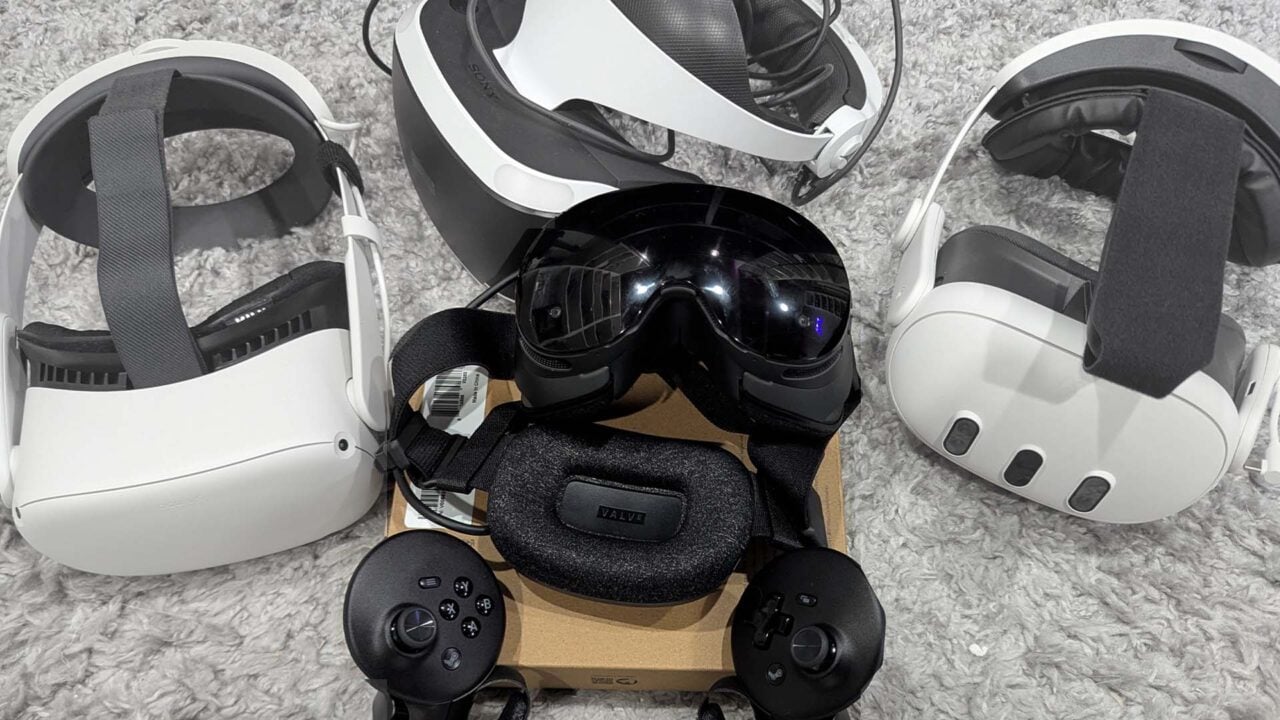
Valve's latest VR push arrives at an awkward moment for the technology. The Steam Frame, priced above $1,000, represents the company's ambitious bet on high-end virtual reality, but early testing reveals a product caught between enthusiast ambitions and mainstream accessibility. The headset packs legitimate technical innovations, yet struggles to justify its premium price to anyone outside a razor-thin niche of dedicated VR adopters.
The Steam Frame brings genuine hardware advances to the table. Display quality, tracking precision, and controller responsiveness all represent iterative improvements over existing competitors like Meta Quest 3S and PlayStation VR2. The headset's ergonomic design reduces fatigue during extended sessions, a practical concern for developers and VR enthusiasts who spend hours in virtual environments. Software integration with Steam remains seamless, offering native support for Valve's expanding VR catalog without friction.
However, technical competence doesn't solve the fundamental market problem. The $1,000+ price tag positions the Steam Frame far above consumer expectations for recreational VR. Most mainstream players will never spend that much on a headset when Meta's Quest line delivers respectable experiences for under $300. PlayStation VR2 lands at $550, also undercutting Valve by a significant margin. Meanwhile, the PC VR market continues fragmenting between tethered headsets, standalone devices, and hybrid solutions that undercut Valve's positioning.
The library question compounds this issue. While Valve has cultivated Half-Life Alyx and other premium VR titles, the broader catalog remains modest compared to the breadth of pancake gaming. Developers haven't yet abandoned traditional gaming in droves to chase VR exclusives. This creates a chicken-and-egg problem. Valve can't justify AAA development investment without installed base. Without a larger game selection, the Steam Frame can't grow its audience beyond existing enthusiasts.
Timing matters enormously here. We're in 2026, and the VR boom predicted ten years ago never materialized at scale. Standalone headsets like Quest dominate casual adoption. Tethered systems struggle against convenience. Enterprise and training applications found their niche, but home gaming adoption plateaued. Valve enters this landscape with premium hardware chasing a market that has already settled its preferences.
The Steam Frame does appeal to specific audiences. Professional developers, 3D artists, and hardcore VR simulation enthusiasts will find value in its technical specifications. Businesses using VR for training or architectural visualization might justify the cost. Content creators invested in Valve's ecosystem specifically could rationalize the purchase. These customers exist, but they represent hundreds of thousands, not millions.
For ordinary gamers in 2026, the recommendation remains unchanged. The Steam Frame is well-built, technically competent, and utterly unnecessary. Most players will achieve more gaming satisfaction through continued investment in traditional PC gaming or console systems. The VR headsets that will matter are the ones that cost half as much and play games people actually want to play.
Valve's engineering team clearly understood VR hardware design. The question they couldn't answer is market positioning. The Steam Frame proves the company can build impressive technology. It doesn't prove anyone outside a devoted minority needs to buy it.