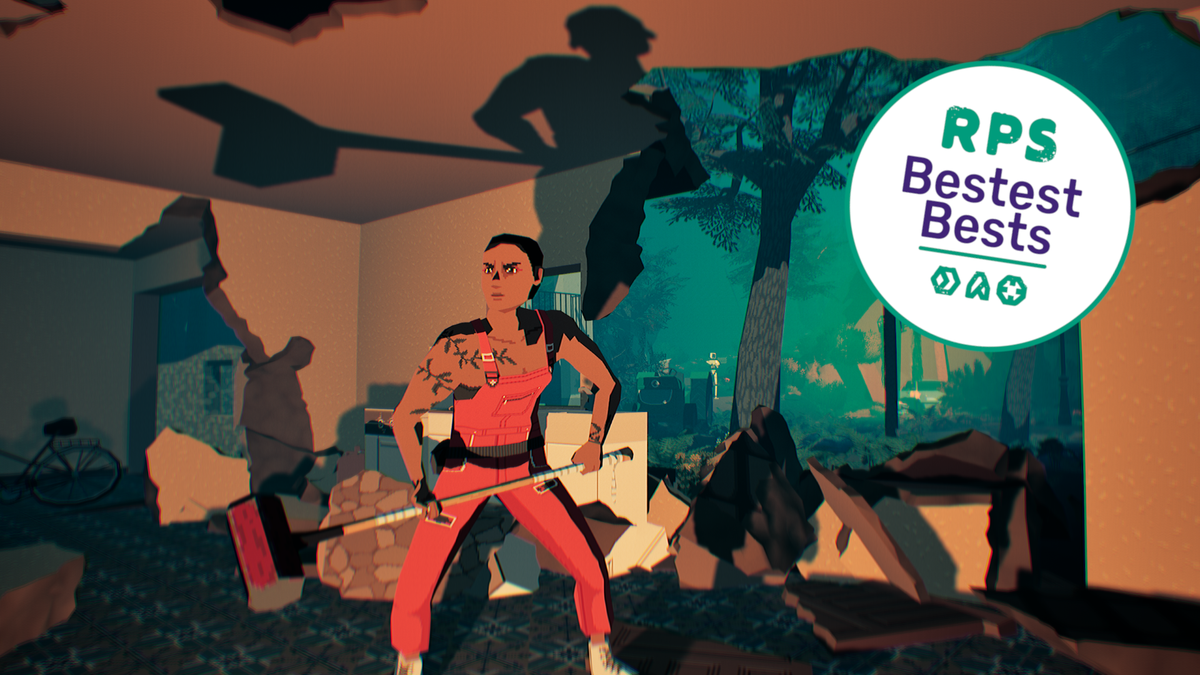
# Virtue and a Sledgehammer Delivers Haunting Sci-Fi Drama Wrapped in Cathartic Destruction
Virtue and a Sledgehammer lingers long after the final swing. The indie title catches players with the promise of satisfying revenge fantasy, then pulls them deeper into a narrative about meaning, consequence, and what it costs to destroy.
The core hook works immediately. Players wield a sledgehammer through a town populated by what the game calls "roboticised arseholes." The mechanical inhabitants provoke violence through their behavior and design. The catharsis feels earned in those early moments. But developer Virtue Games structures the experience to complicate that impulse.
As you demolish the environment and its inhabitants, the game forces reflection. Why are you swinging? What justifies each strike? The abundance of meaning embedded in the wreckage separates Virtue and a Sledgehammer from straightforward destruction fantasies like Rage or Smash TV. This game operates closer to what Control or Spec Ops: The Line attempted: using player agency as a narrative tool rather than merely entertainment.
The AI-faced antagonists anchor the thematic weight. By giving them artificial features, the developer strips away immediate human sympathy while maintaining enough personality to make destruction feel wrong. Players experience the disconnect between wanting catharsis and recognizing the moral weight of their actions. That tension defines the experience.
The sci-fi setting provides crucial context. Rather than smashing humans, you're destroying something post-human, something that has replaced humanity in this town. That framing doesn't absolve violence but contextualizes it within larger philosophical questions about consciousness, replacement, and what we owe to artificial beings we've created.
Virtue and a Sledgehammer runs roughly 3-4 hours, though the campaign's brevity serves the design. The game avoids overstaying its welcome, instead burning its narrative into players' memories through intensity rather than length. Each swing carries weight because the game refuses to let destruction become background action.
The mechanics themselves reflect the narrative. The sledgehammer isn't elegant or precise. It's crude, destructive, and honest. Every impact sends shockwaves through the screen. Destruction animation and physics demand attention. You cannot swing carelessly through this game. The developers force you to see what you're doing.
Indie developers continue to prove they can outpace AAA studios in narrative ambition. Virtue and a Sledgehammer belongs in conversations with games like Braid, What Remains of Edith Finch, or Disco Elysium. These projects use relatively contained scopes to explore complex ideas. They trust players to engage with thematic material rather than explaining meaning through exposition dumps.
The game's lasting impact comes from refusing easy answers. It presents violence, asks you to engage with it, then questions whether your engagement was justified. That discomfort is the point. Virtue and a Sledgehammer won't appeal to players seeking pure power fantasy, but for those willing to examine their own motivations through interactive storytelling, it offers something rare.