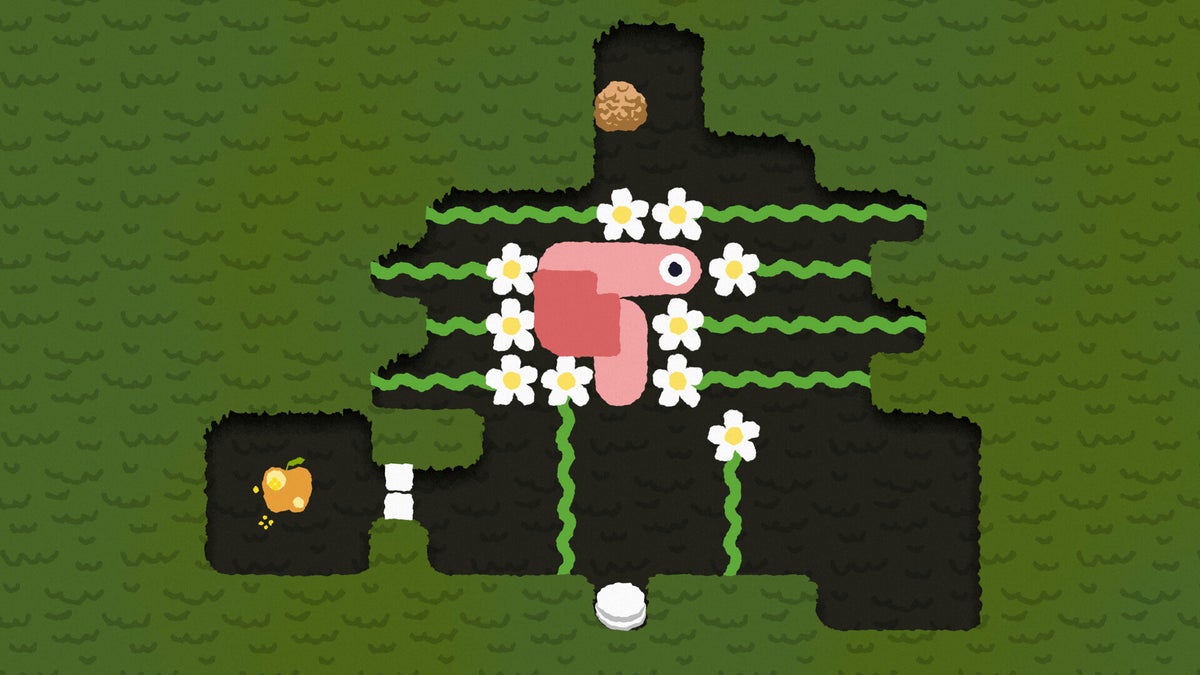
Woim arrives at a peculiar moment. The indie puzzle game launched this week while the games industry weathered significant turbulence, including BioWare's shutdown and other major studio upheavals. Against that backdrop of consolidation and layoffs, Woim offers something refreshingly simple: a sokoban-style puzzle experience built around a worm that devours terrain and bisects itself.
The game's premise plays with expectations. Players control a worm navigating grid-based levels, consuming earth tiles to progress through increasingly complex puzzles. The self-bisecting mechanic introduces a clever twist on traditional sokoban design. When the worm cuts itself, it creates new puzzle elements, forcing players to think about movement sequences differently than they would in classic box-pushing puzzles. The mechanic transforms simple navigation into layered spatial reasoning.
Woim's appeal extends beyond mechanical novelty. After a week marked by studio closures and industry consolidation, indie games like this carry different weight. They represent creative autonomy and smaller teams executing specific visions without corporate pressure to chase live-service metrics or franchises. The game's modest scope and focused design philosophy stand in stark contrast to the sprawling, often troubled development cycles of major publisher titles.
The puzzle genre itself has experienced revival interest over the past few years. Games like Portal 2, The Witness, and Baba Is You demonstrated that sokoban-adjacent design still resonates with players when developers bring fresh mechanics and thoughtful progression. Woim slots into that tradition while carving its own niche through the worm-specific systems.
The timing matters for audience reception. Indie puzzle games thrive during moments when players seek contained, rewarding experiences. Rather than investing weeks in story campaigns or competitive multiplayer, sokoban enthusiasts appreciate bite-sized challenges that offer clear objectives and satisfying solutions. Woim's earth-guzzling mechanics provide that direct feedback loop.
Context matters here too. The games industry's recent turbulence, particularly the closure of veteran studios like BioWare, reflects broader challenges in AAA development. Rising budgets, extended development cycles, and risk-averse publishing strategies create hostile conditions for innovation. Meanwhile, indie developers operating with smaller teams and lower overhead continue shipping creative work. Woim represents that alternative path.
The game positions itself within the broader sokoban renaissance that includes titles like Diorama, A Space for the Unbound's puzzle segments, and Viewfinder's environment manipulation. Each brought distinct mechanics while maintaining sokoban's core appeal: logical progression, elegant puzzle design, and the satisfaction of discovery without combat or time pressure.
Critical reception will likely focus on Woim's mechanical depth and level design quality. Does the self-bisecting system create genuinely novel puzzles, or does it feel tacked onto familiar sokoban structure? Level progression pacing determines whether players stay engaged through difficulty curves or abandon the game when puzzles feel cheap.
For the broader indie scene, Woim exemplifies what smaller developers accomplish when freed from franchise obligations or shareholder pressure. The game exists because its creators wanted to explore worm-based sokoban mechanics, not because market research demanded it. That creative freedom produces unexpected titles that often outlast their AAA contemporaries in player affection and longevity.