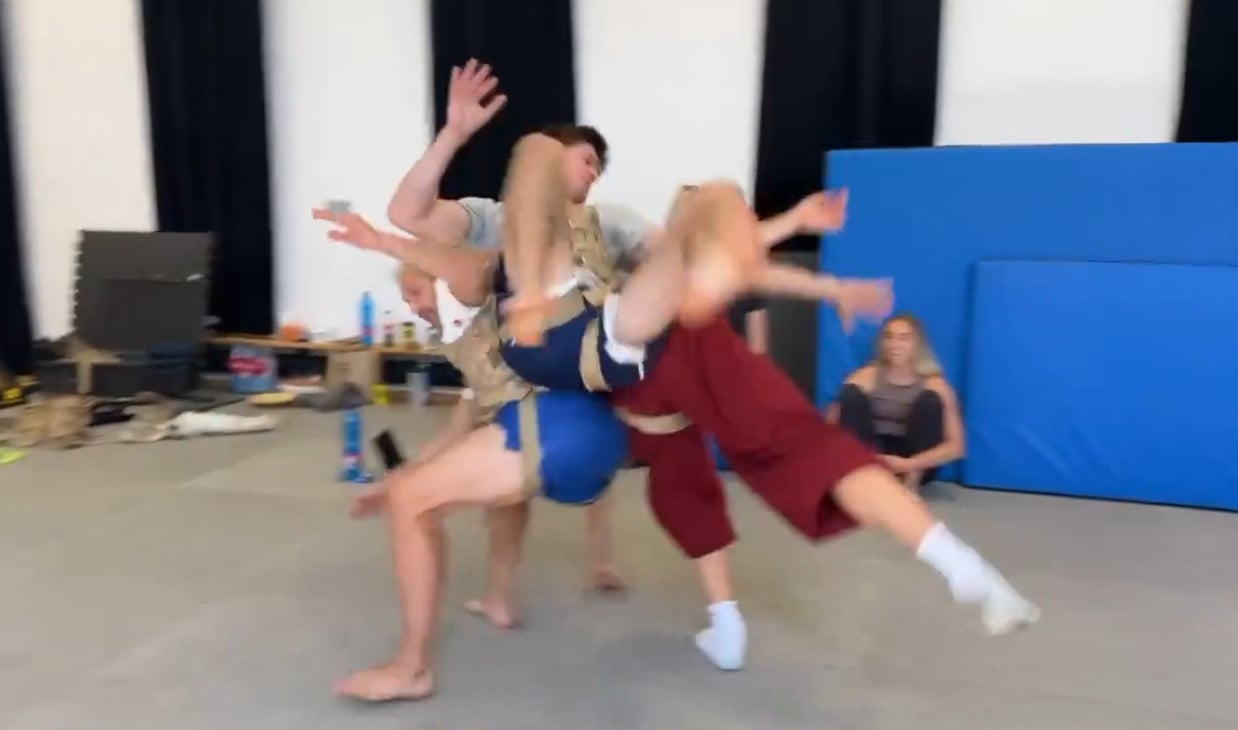
Zach Cregger's Resident Evil film featured one of the franchise's most unsettling creature designs, and the creative team went old-school to bring it to life. A choreographer worked with acrobats to craft the practical effect for the "human tumbleweed" monster that appears in the movie, according to behind-the-scenes documentation shared by Kotaku.
The creature required performers to contort their bodies into impossible configurations, rolling across the screen in a sequence designed to unsettle audiences. Despite the elaborate practical work, Cregger's final cut relied on digital enhancement rather than pure practical effects for the finished shots. The decision reflects modern filmmaking's hybrid approach, where practical stunts serve as foundation work before post-production takes over.
This creature design pulls directly from Resident Evil's legacy of body horror. The franchise, which spans multiple films dating back to Paul W.S. Anderson's 2002 adaptation, has consistently pushed practical effects to their limits. Earlier films used practical monsters alongside CGI enhancements. Cregger's 2021 film adaptation opted for a more grounded approach compared to Anderson's action-heavy sequels, returning closer to the survival horror roots of the video game source material developed by Capcom.
Choreography in creature design remains underutilized in film criticism despite its central role in monster creation. Acrobats and movement specialists shape how audiences perceive digital creatures. Their physical performances inform motion capture data, define silhouettes, and establish movement patterns that animators build upon. Without the choreographer's input, the tumbleweed monster would lack the specific fluidity and wrongness that makes it memorable.
The behind-the-scenes work highlights the gap between filmmaking craft and final product visibility. Audiences never see the acrobats' work directly, yet their contribution defines the viewer experience. This invisible labor remains largely unrecognized despite its technical difficulty and creative importance. Cregger's team invested substantial resources in practical choreography, understanding that even digitally enhanced creatures need a human foundation.
The practical effect approach speaks to industry trends favoring practical work as a starting point. Studios increasingly combine practical stunts with digital refinement rather than building creatures entirely in CGI. This hybrid method produces more believable movement because animators reference real human performance. The approach costs more upfront but yields superior results in creature design.
Resident Evil's box office performance and critical reception shaped how the film's technical choices are now perceived. The movie underperformed commercially against expectations, limiting conversation around its technical achievements. Creature design typically receives attention proportional to a film's overall success. Smaller films with elaborate practical effects often go unheralded while blockbusters with similar technical complexity generate extensive industry discussion.
The tumbleweed monster represents the collaborative technical work that separates competent creature design from exceptional horror filmmaking. Choreographers, acrobats, visual effects artists, and directors all contributed to that single moment. Understanding these layers reveals how horror effects are actually constructed versus the polished final image audiences experience.