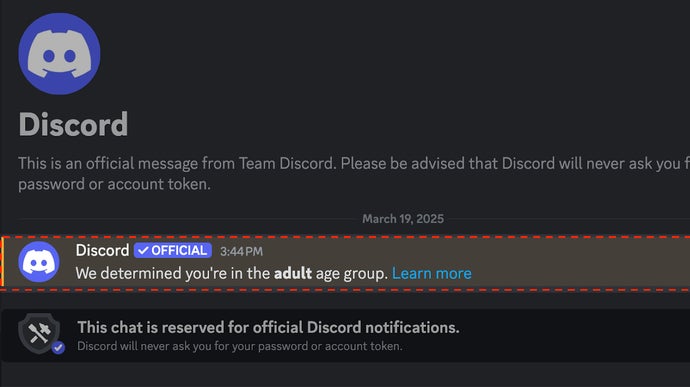
Discord has launched a revised age verification system globally, moving forward after facing significant backlash earlier this year over privacy concerns. The platform initially delayed its rollout in response to user pushback, and now returns with a reworked approach designed to balance child safety with adult user experience.
The new system operates under Discord's stated goal of being "safer for teens, same Discord for Adults." This dual-track philosophy attempts to address the core tension that derailed the first rollout: protecting minors from harmful content while preserving the platform's existing functionality for its adult user base. The company scaled back its most invasive original proposals after the community's negative response.
Discord's age verification push reflects mounting pressure on social platforms to implement teen safety measures. The platform hosts millions of users ranging from pre-teens to adults, with communities spanning gaming, creative projects, education, and social spaces. Without proper age-gating, Discord exposed younger users to adult channels, mature content, and unsupervised interactions. Regulators and parent advocacy groups have intensified scrutiny of platforms that fail to enforce age-appropriate boundaries.
The initial rollout proposal included an age inference model running continuously in the background, which alarmed privacy advocates. Critics feared the system would collect behavioral data from users to estimate age without explicit consent. Discord executives acknowledged the implementation "mucked up" its initial approach, suggesting the company had underestimated privacy concerns in their user base. The delay bought the company time to redesign the verification method with less invasive data collection.
The revised system likely relies more heavily on voluntary age declaration, potentially combined with ID verification for access to age-restricted channels, rather than passive behavioral monitoring. This approach trades some enforcement capability for transparency and user control. Discord users will have clearer visibility into what data the company collects and how it determines access levels.
For gaming communities on Discord, this shift carries operational consequences. Servers hosting mature content, competitive esports teams with adult players, and NSFW creative spaces will face new restrictions. Server administrators must now implement stricter channel permissions and age-gating for content. Some established communities may fragment as users under the age threshold lose access to previously unrestricted channels.
The rollout timing matters. Discord competes for user attention against platforms like Reddit, which implemented similar age-verification systems, and emerging alternatives like Revolt and Guilded. Regulators worldwide have intensified pressure on tech platforms following high-profile incidents involving child safety. The UK Online Safety Bill and similar legislation in the EU create legal incentives for platforms to implement robust age controls. Discord's revised approach positions the company as responsive to regulation without alienating its adult user base through draconian restrictions.
Discord's willingness to revise its initial proposal demonstrates that community pushback can alter corporate strategy in real time. However, the core goal remains unchanged: age verification is coming. The revised system simply reflects a recalibration of how invasive that verification will be and who bears the burden of implementation.