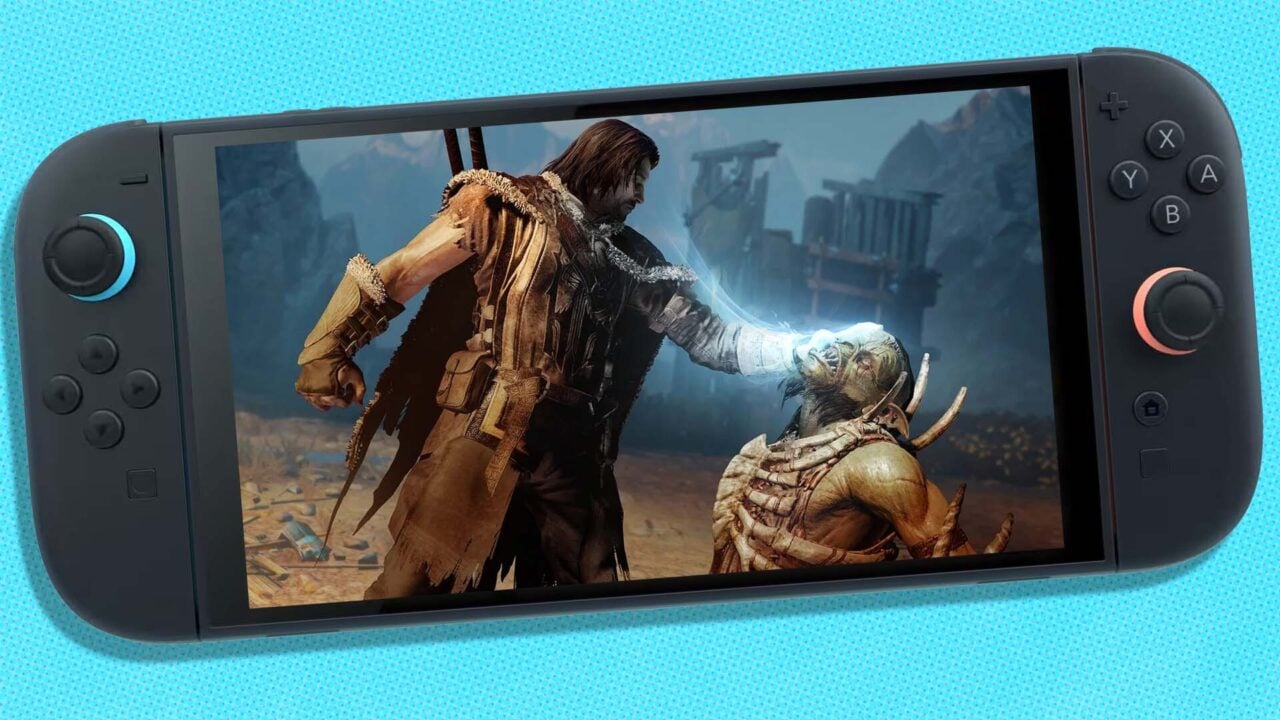
# The War Is Over: Middle-Earth: Shadow Of Mordor And Shadow Of War Finally Coming To Switch 2 Next Week
Monolith Productions and Embracer Group have locked down a long-awaited port strategy. Both Middle-Earth: Shadow of Mordor and Middle-Earth: Shadow of War arrive on Nintendo Switch 2 next week, bundling in all post-launch DLC content at no extra cost. A complete collection bundle will also ship for players wanting both titles in one purchase.
This marks the first time either game hits Nintendo hardware. Shadow of Mordor launched in 2014 on PlayStation 4, Xbox One, and PC to critical acclaim, with its signature nemesis system generating dynamic rival encounters that shaped each player's story uniquely. Shadow of War followed in 2017, expanding that mechanical foundation while deepening the narrative of protagonist Talion's descent. Both games have remained exclusive to PlayStation, Xbox, and PC across their entire lifespan, making this Switch 2 arrival a genuine platform expansion.
The inclusion of all DLC matters. Shadow of Mordor shipped with extensive post-launch cosmetics and challenge modes. Shadow of War received even more substantial add-ons, including story content packs and cosmetic bundles that previously cost extra. Switch 2 players pay nothing additional for this fullness. That's a smart positioning move for a port strategy. Monolith and Embracer eliminate any argument about content parity. New Switch 2 owners get the complete experience.
Switch 2's technical capability enables this port feasibly. The system's processing power and GPU performance exceed the original Switch substantially, clearing the way for demanding titles like these action-adventure games to run without severe compromises. Both Middle-Earth games demand consistent frame rates and detailed environments. Switch 2's hardware justifies the effort here.
The nemesis system remains the mechanical hook that separates these games from standard action titles. Rather than static villain encounters, player actions create organic rivalries. Enemies remember defeats, hold grudges, and return stronger. Combat success or failure against specific orc captains ripples through the entire game world. This systems-driven approach generated player stories that felt personal and unique. Porting this technology to new hardware requires stability and performance. Switch 2's architecture apparently supports the computational load.
Shadow of War's launch faced criticism over its monetization model. The 2017 release included loot boxes tied to progression. Monolith removed those systems post-launch following player backlash, transforming the game into a pure single-player experience. That cleaned version presumably arrives on Switch 2, bypassing the controversy entirely and giving new players the refined experience.
Nintendo's first-party output has long leaned toward original IP and franchises like Mario and Zelda. Third-party ports of major multiplatform titles validate Switch 2 as a destination for demanding games. Monolith's willingness to invest in this port signals confidence in the hardware's market penetration. Embracer Group, which acquired the rights through its Middle-Earth Enterprises acquisition, sees Switch 2 as economically viable territory for established franchises.
The timing matters too. Switch 2 still lacks a substantial launch window library. Each quality port expands the available catalog. Middle-Earth: Shadow of Mordor and Shadow of War bring proven, beloved games to a fresh audience. That approach builds system adoption momentum in the critical post-launch phase.