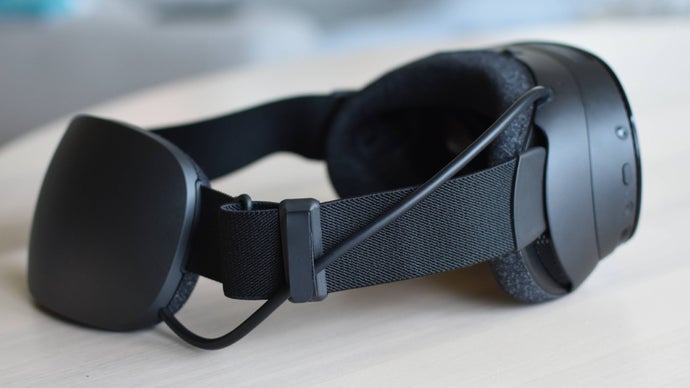
Valve has released the first post-launch software update for the Steam Frame, its newly launched VR headset, addressing key hardware performance issues that plagued early units. The SteamOS 0.3.0 update improves charging speeds and fixes a microphone bug that garbled audio during voice communications, two problems that directly impact daily usability for early adopters.
The Steam Frame launched through Valve's familiar reservation and waitlist system, mirroring the rollout strategy used for the Steam Machine. The headset still occupies that nebulous space between "officially available" and "widely in stock," with units reaching customers in limited batches. Starting at $889 for the base model, the Steam Frame positions itself as an accessible entry point into high-end VR compared to competitors like Meta's Pro lineup and PlayStation VR2.
Charging improvements represent a practical win for owners. VR headsets see heavy daily use, and slow charging cycles frustrate users who want quick turnarounds between sessions. The microphone fix matters equally. VR communication depends on clean voice input for multiplayer games, social VR platforms, and voice commands within SteamOS itself. Audio distortion undermines the entire social experience that justifies many VR purchases.
Valve's post-launch support velocity sets expectations for the platform's maturity. The company learned from Steam Machine's fumbled launch in 2015 that hardware products need aggressive early software iteration to build goodwill. Rapid bug fixes and performance tweaks signal developer commitment and reduce buyer regret among early adopters who always bear the risk of incomplete products.
The update rollout also reflects Valve's ability to push software improvements to distributed hardware via SteamOS, a Linux-based operating system the company controls end-to-end. Unlike manufacturers tied to Android or Windows, Valve can modify system-level drivers and firmware without carrier or third-party approval. This control accelerates fixes and enables optimizations tailored specifically to Steam Frame hardware.
Early VR headset launches historically suffer from software rough edges. The Oculus Rift and HTC Vive both shipped with tracking bugs, comfort issues, and audio problems that required months of updates. Valve's track record with Steam and Steam Deck suggests the company approaches hardware launches with realistic expectations about iteration cycles. SteamOS 0.3.0 arriving quickly demonstrates this philosophy in action.
The microphone bug specifically hints at deeper audio stack issues. VR headsets contain integrated mics near the user's face, and proper noise cancellation algorithms matter enormously for voice clarity in noisy environments. A garbled mic suggests either driver problems, firmware calibration issues, or algorithm tuning failures. Fixing this requires either Valve engineers or third-party audio vendor collaboration, indicating the update involved real problem-solving rather than simple parameter tweaks.
Valve has not yet detailed what other changes SteamOS 0.3.0 brings. The "among other techni..." truncation in the patch notes indicates additional improvements exist but remain undisclosed in available coverage. Future updates will likely address performance optimization, game compatibility, and feature additions as the Steam Frame ecosystem matures.
For potential buyers still on waitlists, the rapid update cycle provides confidence that Valve treats the Steam Frame as a serious platform investment rather than experimental hardware. Manufacturers that ignore early bugs lose customer trust permanently. Valve's early responsiveness suggests Steam Frame owners can expect sustained support through the critical first-year window when adoption momentum builds or stalls.