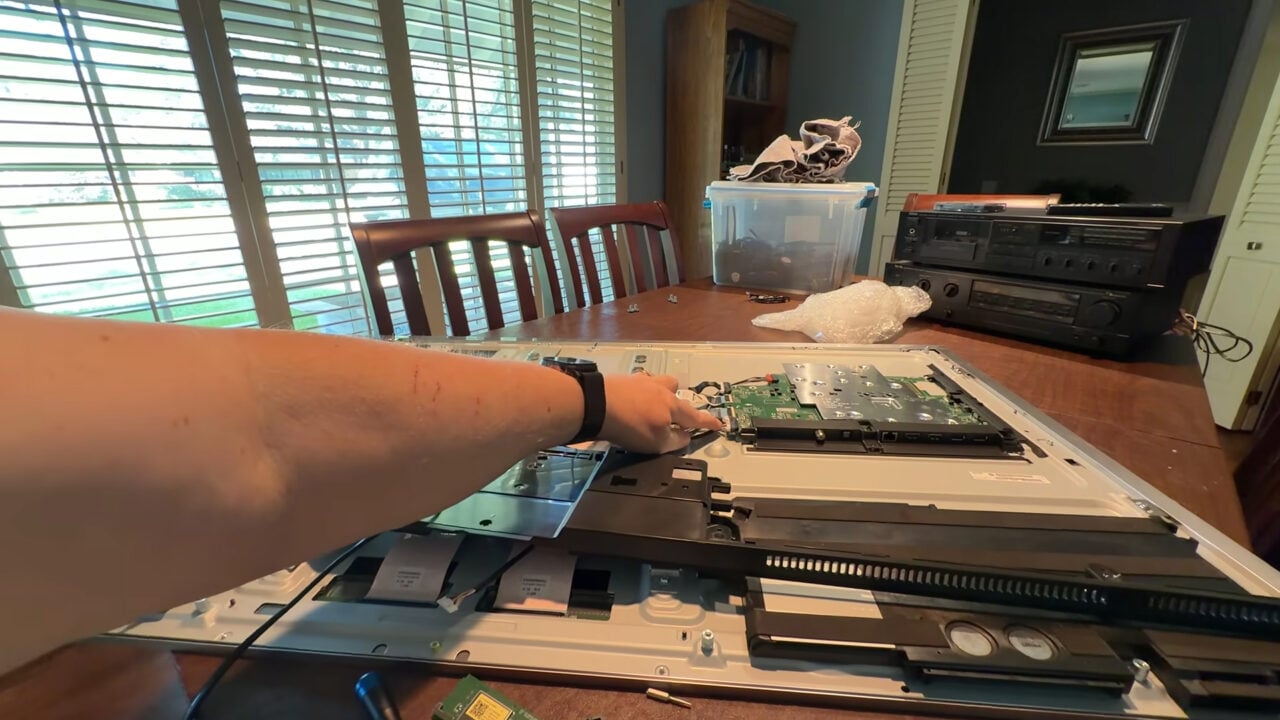
A tech-savvy consumer has physically dismantled privacy features from a new LG television, removing its built-in microphone and WiFi components after discovering the TV's data collection practices. The incident, documented and shared online, has resonated with thousands of users frustrated by invasive smart TV functionality.
LG's latest television models include always-on microphones and persistent internet connectivity designed to gather user behavior data. The company markets these features as part of its "smart TV" ecosystem, enabling voice commands and personalized recommendations. However, the data collection extends beyond what many consumers consider acceptable. The TV reportedly transmits viewing habits, voice recordings, and usage patterns back to LG servers, even when users believe they have disabled these features.
The person who performed the hardware modification posted images and video of the procedure, explicitly removing the microphone and disabling the WiFi module. His comment captures the core grievance: "You don't own the glass on this one." The statement reflects broader anxiety about consumer ownership in the smart device era. Even after purchasing a television outright, users cannot fully control what data their device collects or how manufacturers use it.
The backlash reveals a widening gap between manufacturer intentions and consumer expectations. Smart TVs have become ubiquitous, with LG, Samsung, Vizio, and other major brands integrating surveillance-adjacent features as standard. Most consumers don't realize the extent of data collection until they examine privacy policies or, in this case, physically inspect their hardware.
LG has included microphones in TVs for several generations, ostensibly for voice command functionality. But the always-on nature of these mics, combined with cloud connectivity, creates a persistent listening device in millions of living rooms. Users report that disabling voice assistant features through the settings menu does not actually deactivate the hardware. The microphone remains active, capturing audio that syncs with LG's servers.
Comments on the original post overwhelmingly supported the hardware hack. Users shared their own frustrations with intrusive smart TV practices, with many describing disconnecting their televisions from WiFi entirely or purchasing older, non-connected models specifically to avoid surveillance. Some noted that simple privacy settings no longer exist on modern televisions, forcing consumers into an all-or-nothing proposition: accept full data collection or lose smart features altogether.
The incident underscores a shift in consumer electronics philosophy. In the 1990s and early 2000s, purchasing a TV meant owning a device with no external dependencies. Today, manufacturers treat TVs as data collection platforms that happen to display video. Firmware updates can enable new tracking features. Terms of service change unilaterally. Users have no recourse except physical modification or replacement.
LG has not publicly responded to the incident. The company has weathered similar privacy complaints from consumer advocacy groups in Europe and North America, though regulatory action remains limited. The European Union's emerging digital regulations may eventually force manufacturers to provide genuine opt-out mechanisms, but US consumers currently lack equivalent protections.
This moment reflects the 2026 tech landscape where privacy violations have become normalized business practice. Consumers increasingly resort to hardware-level solutions because software controls prove inadequate or deliberately obscured. The DIY privacy approach spreads not because users enjoy opening their televisions, but because manufacturers have made it the only effective option.