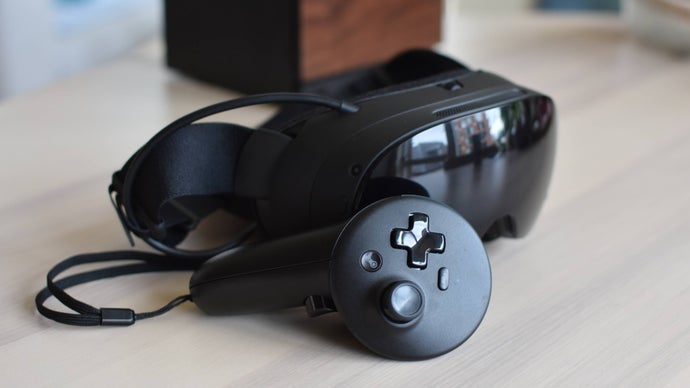
Valve has signaled that Steam Frame represents merely the opening salvo in a broader initiative to expand Steam game compatibility across ARM-based processors and non-traditional computing hardware. The company confirms it is actively developing solutions to make PC gaming more accessible on devices that historically struggle to run desktop Steam titles.
The Steam Frame, Valve's VR headset, demonstrates a proof of concept. The device runs Steam games natively on its own internal hardware without requiring a connection to an external PC. This positions the Frame as a self-contained SteamOS machine that operates entirely independently. The headset handles both traditional flat games and VR titles through its built-in processor, a technical achievement that underscores Valve's commitment to portable, decentralized gaming.
What makes this announcement significant extends beyond the Frame itself. ARM processors power everything from smartphones to tablets to emerging handheld gaming devices. Historically, these architectures have created bottlenecks for PC gaming. Games compiled for x86 and x64 processors cannot simply run on ARM without translation layers or substantial optimization work. Valve's efforts to bridge this gap could reshape how games are distributed and played across diverse hardware platforms.
The company's roadmap indicates this compatibility work will benefit additional products beyond the Steam Frame. Valve intends to make it simpler for Steam games to function across a wider range of ARM-based systems. This suggests potential applications for future Steam handheld devices, mobile platforms, or partnerships with third-party manufacturers building alternative gaming hardware.
Proton, Valve's compatibility layer that translates Windows games to run on Linux, already demonstrates the company's technical prowess in breaking down platform barriers. Extending similar principles to ARM architecture represents a logical evolutionary step. However, the engineering challenges differ substantially. ARM lacks the instruction set compatibility that makes Linux translation relatively straightforward. Developers must often recompile code or implement more sophisticated emulation techniques.
The RAM shortage affecting current Steam Frame production illustrates the real-world constraints shaping Valve's hardware ambitions. Supply chain issues forced compromises on specifications, yet the company maintains confidence in the long-term strategic value of the product line.
Industry observers recognize that Valve's push into ARM compatibility could democratize PC gaming. Currently, expensive gaming PCs or consoles represent primary entry points for AAA titles. If Valve successfully scales ARM support, more affordable devices could run demanding games. This threatens traditional console business models while potentially fragmenting development workflows across multiple architectures.
The announcement also signals tension between the closed ecosystem model favored by console manufacturers and Valve's open-platform philosophy. By investing in ARM compatibility layers and cross-platform solutions, Valve positions Steam as the universal gaming platform, compatible with virtually any underlying hardware.
Third-party manufacturers are watching closely. Companies developing alternative gaming handhelds or ARM-based systems now have incentive to negotiate with Valve or adopt SteamOS to gain access to the massive Steam library. This creates leverage Valve did not possess five years ago.
Whether this investment yields broad commercial success remains uncertain. Steam Deck's strong adoption demonstrates market appetite for portable PC gaming. Steam Frame's ARM-compatible implementation suggests Valve believes portable gaming represents the future, and universal platform compatibility represents the competitive advantage that sustains growth across an increasingly fragmented hardware landscape.