# 500 FINGER FILLET's Demo Proves Deceptively Stressful
500 FINGER FILLET strips down input to its bare minimum. Players click the left mouse button repeatedly. That's it. Yet developer Red Candle Games transforms this simplicity into genuine tension through a roguelite structure that punishes every mistake with permanent finger loss.
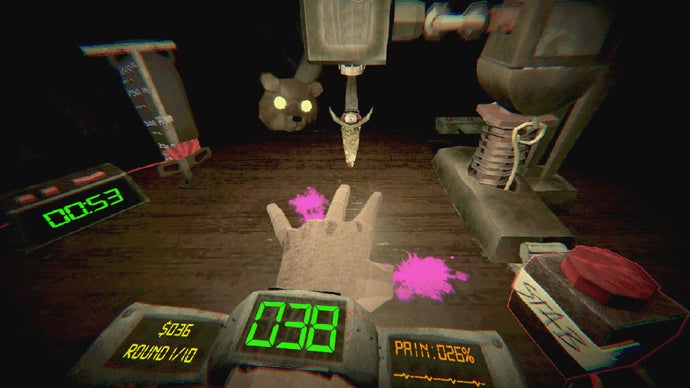
The demo delivers the core concept with brutal clarity. You perform the finger fillet game, that dangerous trick where a knife weaves between spread fingers at speed. One slip costs a digit. Lose all ten and the run ends. Multiple attempts across different roguelite runs means you'll lose fingers progressively, watching your hand become increasingly mutilated.
The game's genius lies in escalation. Early stages feel manageable. Speed increases relentlessly. By mid-run, muscle memory falters. Tension spikes. The simplicity of clicking becomes deceptive. Your brain knows the task is trivial, but your fingers betray you. That disconnect between understanding and execution creates psychological stress most games can't achieve.
500 FINGER FILLET capitalizes on a specific type of horror, one rooted in body autonomy and irreversible consequence. Permadeath mechanics work here because they're personal. You watch your character's hand deteriorate across attempts. Future runs start at a disadvantage. The game creates stakes where none should exist for a one-button clicker.
This approach echoes minimalist design trends like Getting Over It and Pogostuck, where simple mechanics hide complex difficulty curves. But 500 FINGER FILLET adds visceral dread through the fingerfillet concept itself, a real-world danger game most players know by reputation. The game weaponizes that knowledge.
The demo suggests full release will expand on this foundation. More roguelite layers, deeper progression systems, and additional