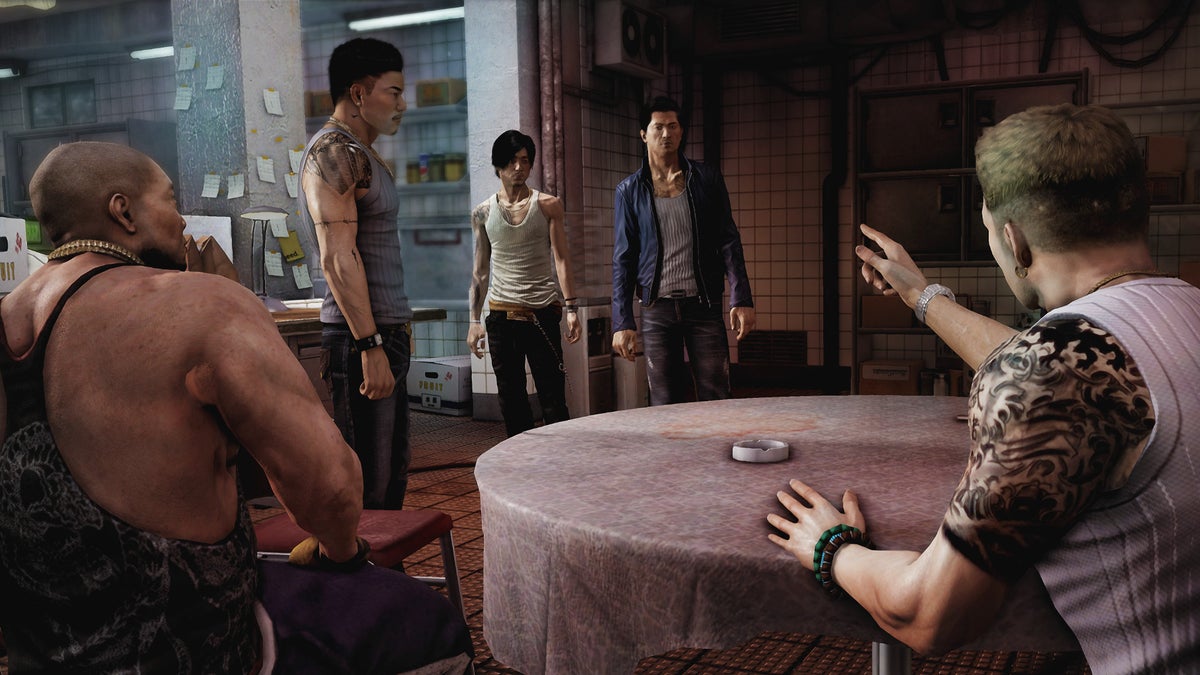
Sleeping Dogs, the 2012 open-world crime game developed by United Front Games and published by Square Enix, occupies its own space among crime sims. The game follows Wei Shen, an undercover cop infiltrating Hong Kong triads, and balances his double life between criminal survival and gathering evidence against the gangs.
The game uses minimal life-simulation details compared to modern entries like Red Dead Redemption 2 and GTA 6. Wei can purchase pork buns from street vendors for a temporary health boost, but no meter tracks his consumption. He can sing karaoke, play mahjong, or take other optional actions without systems demanding regular participation. Wei can even use bathroom facilities in his apartment, an action with no mechanical impact on gameplay.
Rock Paper Shotgun notes that Sleeping Dogs occupies tonal territory closer to GTA 4's gritty urban drama than GTA 5's heist-movie setting. Like GTA 4, it delivers emotional investment in its protagonist without extensive detail systems. The game draws comparisons to entries from RGG Studio's Like A Dragon and Yakuza series alongside its influences from Grand Theft Auto and Saints Row.
Modern crime sims have expanded far beyond what games like Sleeping Dogs offered in 2012, absorbing features once exclusive to arcade racers and hunting sims. The question for newer titles becomes whether adding systems across multiple directions enhances or dilutes the core appeal that defined these games historically.