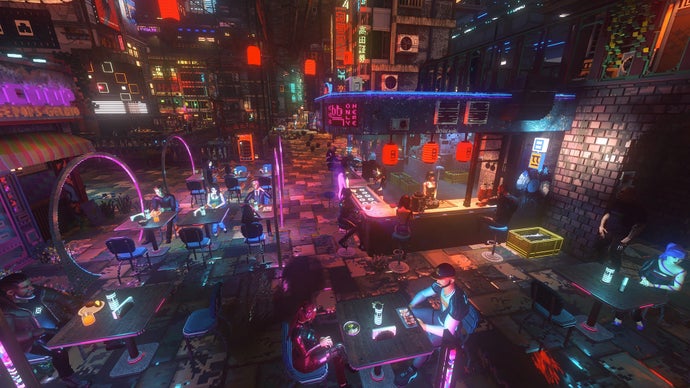
Nivalis Nights launches today as a slice-of-life spin-off set in the voxel cyberpunk world of Cloudpunk. The game flips the script on the original delivery-driver narrative, instead putting players in charge of running their own ramen restaurant within the neon-soaked city.
Developer Ion Lands brings the same low-poly, isometric aesthetic that defined Cloudpunk but refocuses the experience entirely. Where the 2020 original centered on courier missions and urban exploration, Nivalis Nights prioritizes restaurant management mechanics layered atop leisurely city exploration. Players design their ramen bar, manage inventory, serve customers, and build relationships with regulars while wandering the cyberpunk streets during downtime.
The shift reflects a broader industry trend toward cozy management games and relaxation-focused experiences. Studios increasingly recognize that players want slower, narrative-driven alternatives to combat-heavy releases. Nivalis Nights arrives amid an autumn packed with major releases, most notably the looming arrival of Grand Theft Auto 6. In this crowded window, Ion Lands positions Nivalis Nights as a counterweight to blockbuster action games, offering instead contemplative gameplay centered on hospitality and community.
Cloudpunk players will recognize the city's layout and characters, but newcomers can jump in without prerequisites. The world-building accommodates both audiences, with the ramen bar serving as a natural hub for storytelling and character interaction. This approach mirrors successful management games like Stardew Valley and A Short Hike, which layered life-simulation mechanics into exploration-focused designs.
Nivalis Nights faced multiple delays before today's release, extending development timelines familiar to many indie studios navigating post-pandemic production challenges. The extended wait likely gave Ion Lands additional polish time for mechanics that demand precision in timing and resource allocation. Restaurant management games live or die by their systems, and rushed implementations damage long-term player retention.
The game launches simultaneously across PC and Nintendo Switch, with each version optimized for its respective platform. The Switch release proves particularly interesting given the handheld's strength in lifestyle games and indie titles. Portable ramen-bar management appeals directly to Switch's established audience.
Market saturation with management games means Nivalis Nights must differentiate itself through narrative depth and world-building rather than mechanical innovation. The Cloudpunk connection provides built-in brand recognition among players familiar with that game's atmospheric storytelling. Those who appreciated Cloudpunk's slower pacing and cyberpunk aesthetics represent the core audience most likely to engage with this spiritual successor.
Ion Lands targets players fatigued by action-game dominance seeking genuinely relaxing experiences. Nivalis Nights doesn't demand twitch reflexes or competitive mastery. Instead it rewards patience, conversation, and gradual relationship building. In an industry often obsessed with adrenaline-driven blockbusters, slice-of-life games like this fill an underserved niche.
The ramen-bar setting carries specific cultural resonance. Japanese food culture holds particular appeal in gaming communities, and the intimacy of a small restaurant contrasts sharply with sprawling open-world cityscapes. Players can build something small, meaningful, and personal rather than chasing megastructure objectives that characterize mainstream AAA design.
Nivalis Nights arrives as a palate cleanser in an exhausting release calendar. Its launch marks another data point in the growing acceptance of quiet, contemplative games as legitimate commercial products rather than niche indie experiments.