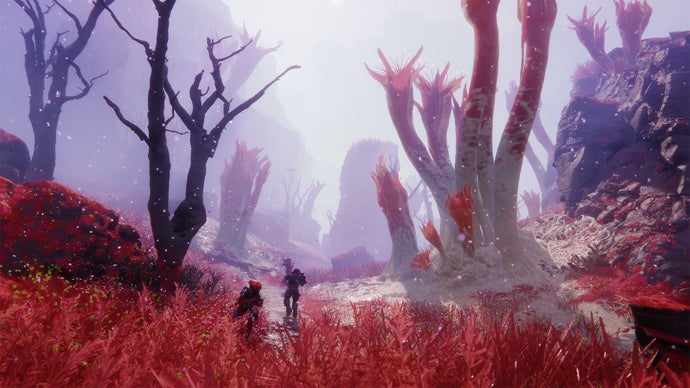
Bungie is charting a new direction for Marathon, the live-service shooter that launched in early access last year. The studio plans to evolve the game significantly beyond its current extraction-based framework, introducing features like social hubs and a fungus-filled new map called Perimeter.
The studio's blog post reveals Marathon will shift away from pure extraction gameplay, the core mechanic where players loot enemy corpses and map resources before escaping via extraction points. That foundational design remains part of the experience, but Bungie wants the game to offer more. The Perimeter map introduces environmental storytelling through organic fungal growth, suggesting the developer wants to deepen the world beyond mechanical loops.
Social functionality emerges as a second pillar. Live-service shooters compete for player retention not just through combat systems but through community features. Bungie learned this lesson across multiple Destiny 2 seasons and expansions. Adding dedicated social spaces lets players gather, trade, coordinate teams, and simply exist together without constant combat pressure. This mirrors trends across extraction shooters like Escape from Tarkov and Cycle: Frontier, where waiting areas and trade hubs keep players engaged between raids.
The timing matters. Marathon launched to mixed reception in 2024. Players criticized the extraction-only loop as repetitive and punishing. Bungie's recent decision to resurrect vaulted Destiny 2 campaigns signals the studio is listening to retention problems. Marathon's evolution follows the same pattern. Extraction shooters thrive when players have clear progression systems, cosmetics worth chasing, and reasons to log in beyond grinding loot. Adding social layers addresses psychological retention, not just mechanical engagement.
The "beyond extraction" philosophy suggests Bungie may introduce alternative game modes. Destiny 2 seasons introduced various PvE and PvP formats beyond the base raid loop. Marathon could adopt similar variety. Seasonal operations, puzzle-solving events, or time-limited PvEvP scenarios with different rules would break monotony without abandoning the core extraction experience that defines the game's identity.
Environmental design becomes narrative delivery. The Perimeter's fungal ecosystem hints at deeper storytelling ambitions. Marathon's pre-launch universe established lore around a mysterious AI and human conflict on an alien moon. Organic environments tell that story through exploration, not cutscenes. Players who engage with environmental puzzles or hidden lore elements gain investment in the world, transforming Marathon from a pure loot shooter into an experience with narrative depth.
Bungie faces execution risk. The studio has over-promised on live-service roadmaps before. Destiny 2 suffered years of delays and scope creep before finding stable footing. Marathon players have seen these commitments before. The studio needs to deliver the Perimeter map on schedule, demonstrate how social hubs actually improve gameplay, and prove that moving beyond extraction doesn't dilute the core experience that attracted dedicated players.
The shift reflects broader industry patterns. Helldivers 2 succeeded by combining PvE extraction gameplay with clear progression and cosmetics. Call of Duty's Warzone DMZ mode offers extraction mechanics alongside traditional multiplayer. Marathon cannot compete on gunplay alone against established titans like Valorant or CS2. Depth comes through systems, community, and world investment.