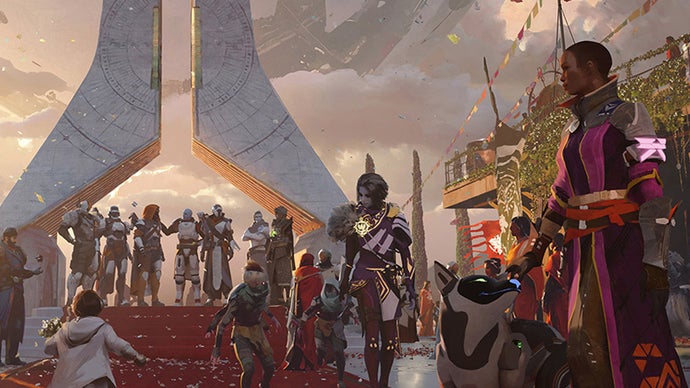
Bungie has reversed its decision to wind down Destiny 2 development, committing to restore vaulted campaigns while simultaneously declaring that Marathon, their competitive extraction shooter, requires fundamental evolution to succeed.
The studio announced it will bring back previously removed Destiny 2 campaigns, a significant reversal after years of content removal to manage the game's file size and server load. This move contradicts Bungie's earlier pivot toward Marathon as the studio's primary focus. The decision comes as Marathon faces an uncertain reception since its early access launch, with the extraction shooter struggling to carve out space in a crowded competitive market dominated by established franchises like Escape from Tarkov, Marauders, and DayZ.
Bungie simultaneously acknowledged that Marathon "needs to evolve," signaling the studio recognizes the game's current formula isn't resonating strongly enough to justify abandoning their flagship franchise. This dual announcement reveals tension within Bungie's long-term strategy. For over a decade, Destiny 2 has generated consistent revenue through seasonal content and the expansion cycle that began with Beyond Light in 2020. However, the studio bet heavily on Marathon as its next major IP, dedicating substantial resources to the live-service shooter.
The campaign restoration represents a meaningful concession to the Destiny 2 player base, which has consistently requested access to removed content like the Red War campaign, Curse of Osiris, and Warmind. Bungie cited technical constraints when vaulting these campaigns in 2020, but player frustration over losing paid content has remained a sore point for nearly five years. Bringing these campaigns back addresses that grievance while providing tangible new content for a player base hungry for fresh experiences.
Marathon's underperformance has forced Bungie to recalibrate. The game launched to mixed reception, with players criticizing its steep learning curve, limited map rotation, and unclear progression systems compared to more established extraction shooters. The departure of leadership at Bungie in recent months, including CEO Pete Parsons stepping down, created organizational uncertainty that likely contributed to this strategic pivot.
Bungie also dismantled its strict seasonal schedule for Marathon updates, moving toward less frequent but potentially larger content drops. This shift acknowledges that the live-service model that works for Destiny 2 doesn't translate directly to extraction shooters, where player bases gravitate toward deeper systems and meaningful progression loops rather than time-gated seasonal rewards.
The simultaneous commitment to both franchises signals Bungie recognizes it cannot afford to abandon Destiny 2's engaged playerbase while building Marathon. Destiny 2 remains profitable and culturally significant within MMO shooter circles, particularly among console players. Neglecting it entirely for an underperforming new IP would damage studio reputation and financial stability.
This reversal also reflects industry-wide lessons about live-service cannibalization. Studios attempting to transition player bases from established franchises to new properties routinely underestimate attachment to existing content and community infrastructure. Bungie appears to have learned this lesson, opting instead for a portfolio approach where both games receive development attention.
Whether Bungie can sustain dual development while evolving Marathon into a compelling competitor remains uncertain. The studio has announced layoffs during the Marathon development cycle, potentially constraining its capacity for parallel projects. The next months will determine whether this strategy represents genuine course correction or temporary damage control.