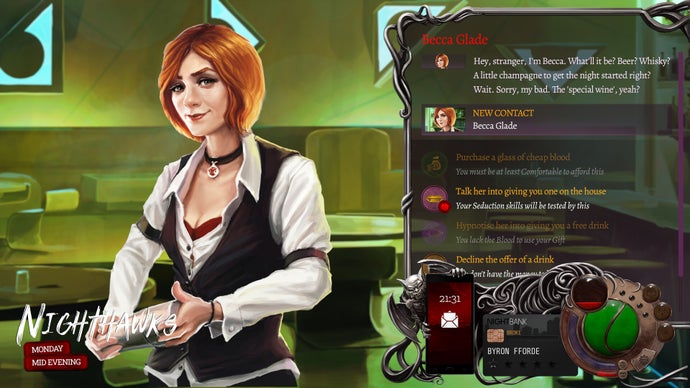
Nighthawks, the 2026 vampire RPG, attempts to capture the emotional weight of Edward Hopper's 1942 painting by the same name. The game structures itself around episodic vignettes set in isolated late-night spaces, exploring themes of loneliness and connection. The execution, however, proves uneven.
The core concept works when the developers nail the atmosphere. Nighthawks uses the diner setting and urban isolation as thematic anchors, mirroring Hopper's original exploration of people existing in proximity without genuine closeness. When individual stories land, they linger. The game demonstrates understanding of how mundane spaces can feel heavy with meaning, how a bartender's glance or a patron's silence carries weight.
The vampire RPG framework serves this narrative approach. Nighthawks positions players in these small moments of human (and inhuman) interaction, where dialogue and observation matter more than combat or progression systems. This approach differentiates it from traditional fantasy-heavy vampire games that prioritize power fantasies. Instead, Nighthawks asks players to sit with discomfort, witness quiet desperation, and navigate moral nuance in conversations that rarely feel clean.
But the game falters when its episodic structure becomes repetitive or when individual vignettes lack narrative punch. Not every subplot lands with the same impact. Some scenes drag, their symbolic weight failing to compensate for thin plotting. The pacing between moments of genuine connection and hollow transitions tests player patience. When a vignette doesn't work, there's no mechanical framework to fall back on. The game lives or dies on storytelling alone.
The 2026 release timing places Nighthawks in a competitive narrative-focused indie space. Games like Disco Elysium, Firewatch, and What Remains of Edith Finch have established high bars for atmospheric, character-driven experiences without traditional gameplay loop demands. Nighthawks joins that conversation but doesn't consistently outpace its peers.
What makes Nighthawks worth considering is its ambition to translate visual art into interactive experience. Hopper's work hinges on what viewers infer from composition and lighting. Nighthawks the game must achieve equivalent suggestion through dialogue, player choice, and pacing. When it succeeds, the adaptation justifies itself. A conversation in a late-night diner takes on the same uncomfortable intimacy as Hopper's composition.
The vampire element adds layer without dominating. Rather than treating vampirism as spectacle, the game uses it as a lens for exploring otherness and displacement. The player character's nature becomes relevant not through exposition dumps but through how NPCs react, what conversations become possible, what empathy becomes complicated.
For players seeking experimental narrative experiences, Nighthawks offers moments worth experiencing. It demands patience and rewards close attention. The game understands that not every beat needs to explode with action or revelation. Quiet observation and subtext matter.
The inconsistency remains the central issue. Nighthawks reaches for something artful but doesn't maintain that reach throughout. Expect standout sequences surrounded by filler. Expect emotional payoff interrupted by scenes that meander without purpose. The game demonstrates genuine craft without achieving consistent excellence.