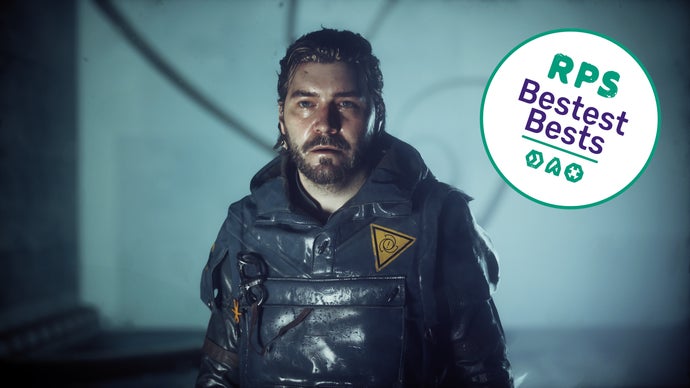
# Control Resonant Review: Remedy's Unlikely Sequel Proves Stranger Games Have a Home
Control Resonant exists against the odds. Remedy Entertainment built a sequel to a commercially modest shooter and threw out half its DNA. Gone is Jesse Faden. Gone is the gun-based combat. In her place stands a new protagonist wielding a shapeshifting melee stick, trading third-person gunplay for an action-RPG framework that feels reckless on paper. On screen, it works.
The original Control launched in 2019 to mixed reception. Critics loved its supernatural atmosphere and reality-bending visuals, but sales never matched the studio's ambitions. The game sold respectably but not spectacularly, landing somewhere between cult hit and commercial disappointment. Most studios would have shelved the franchise. Remedy instead doubled down on the weirdness.
Control Resonant strips the series down to its metaphysical core. The paranormal bureaucracy of the Federal Bureau of Control remains, but the gameplay philosophy has inverted. Where Control emphasized positioning, weapon switching, and tactical pause-and-fire combat, Resonant embraces melee-focused action wrapped in role-playing systems. Players battle "interdimensional cryptids," abstract entities that shouldn't exist in our world, using a stick that shifts its form and function mid-combat.
This shift matters because it reflects a broader confidence in the action-RPG space. Palworld, Elden Ring, and even Marvel's Midnight Suns proved that genre hybrids attract players willing to experiment. Remedy recognized that Control's supernatural premise could anchor a different kind of game entirely. The makeover suggests the studio learned from the original's tepid commercial performance: sometimes reinvention beats sequel-by-numbers.
The tone here cuts deeper into the absurd. Reviewers describe the game's atmosphere as "superbly strange" and its moment-to-moment design as producing contradictory feelings. Players simultaneously feel tiny against cosmic horrors and godly in their power to reshape those horrors. That cognitive dissonance appears intentional. It mirrors Control's original hook: a grounded protagonist navigating impossible situations with escalating supernatural abilities.
The shapeshifting stick mechanic drives both combat and identity. Mid-fight transformations keep battles kinetic and unpredictable. This directly contrasts with the original's deliberate firearm selection and cooldown management. Resonant prioritizes flow and adaptation over precision and planning. Early reports suggest the pacing delivers where the first game sometimes stumbled.
Remedy's decision to replace Jesse Faden sparked debate among fans, but the new protagonist appears thoughtfully integrated into Resonant's revised tone. A completely fresh character sidesteps direct comparison to the original and lets players enter this world without baggage.
The PC and PlayStation 5 release lands at a moment when mid-budget action-RPGs have momentum. Not every studio can fund experimental sequels that pivot genres. Remedy wagered that Control's fanbase cared about the world and weirdness more than specific mechanics. Early critical response suggests that bet is paying off.
Control Resonant proves that commercial disappointment doesn't demand creative retreat. Sometimes it demands the opposite: deeper weirdness, bolder design choices, and a willingness to alienate players seeking a direct sequel. Remedy made the stranger game. Players who wanted Control 2.0 might feel betrayed. Those hungry for something genuinely unusual have found it.