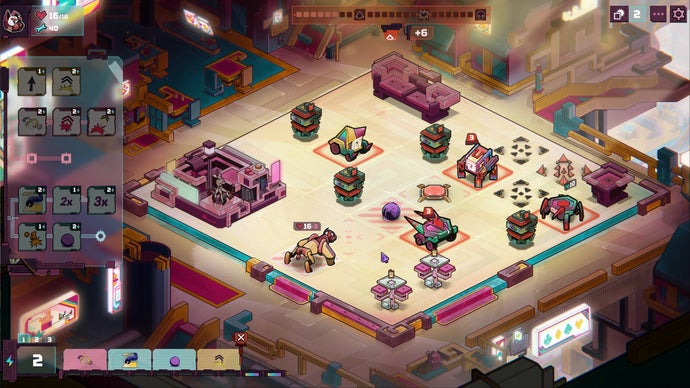
Dog in the Machine applies the tactical puzzle formula that made Into The Breach a critical success to an entirely different premise. Subset Games' 2014 grid-based tactics game revolutionized the genre by eliminating randomness and fog of war, allowing players to see enemy moves before committing their own. Now a new indie title takes that core loop and wraps it around mecha dogs executing trained tricks in combat scenarios.
The game positions itself as a turn-based tactics puzzler where players teach robotic hounds specific moves and commands, then execute them on a grid-based battlefield. The analogy to a mecha dog show hits immediately. Each turn, players assign tricks to their canine units, anticipating enemy patterns and positioning to create chain reactions. Like Into The Breach, success hinges on planning several moves ahead and understanding how actions cascade across the board.
The key difference separates Dog in the Machine from pure Into The Breach clones. Where Into The Breach emphasizes precise positioning and knockback mechanics, Dog in the Machine leans heavily into a trick system. Players build a repertoire of moves for each dog, then chain them together tactically. Think of it as command-based puzzle solving where learning what each dog can execute becomes central to progression. The mecha dog aesthetic transforms what could be another tactics derivative into something with genuine personality.
This design choice matters for accessibility and engagement. Into The Breach intimidated some players with its unforgiving grid mathematics. By framing tactics through teaching dogs tricks, Dog in the Machine creates a gentler onramp. The fantasy of training mechanical pets appeals beyond hardcore tactics fans. The game inherits Into The Breach's "you versus the system" clarity while adding character progression through learned abilities.
The indie scene has seen an uptick in tactics puzzlers post-Into The Breach success, but most iterate cautiously. Titles like Wildermyth and Phantom Spark riff on the formula while adding their own systems. Dog in the Machine takes a more experimental approach by completely reskinning the experience around a specific theme. Whether that theme sticks with players will determine if this becomes another tactics fixture or a clever novelty.
Currently, Dog in the Machine targets PC release. The game carries no official release window beyond "coming soon," typical for early-stage indie projects. Given the current tactics renaissance on indie platforms, timing matters. The market hungers for fresh takes on the genre without demanding photorealistic triple-A presentation. Dog in the Machine's obvious visual charm and streamlined premise position it well.
The mecha dog show framing could attract players fatigued by sci-fi militarism that dominates tactics games. Into The Breach's spacefaring resistance narrative works, but Dog in the Machine's approach feels refreshingly absurd. There's comedy baked into the concept before players even load the first mission. That tonal shift might prove more memorable than another "save the world" structure.
Subset Games never formally endorsed Dog in the Machine as spiritual successor, but the design lineage runs clear. Rather than fight that comparison, smart marketing would embrace it. "Into The Breach for dog lovers" sells itself.