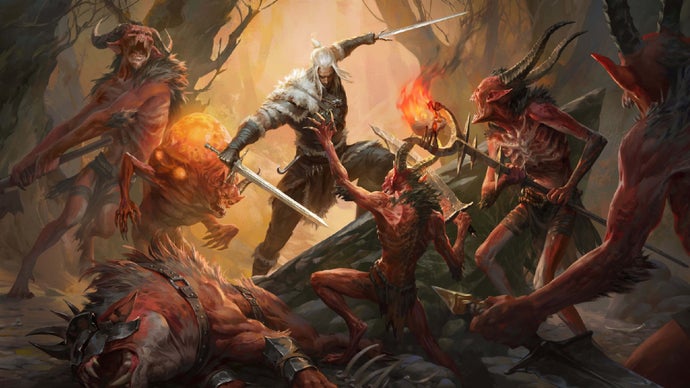
Blizzard has publicly distanced Battle.net from competition with Steam and Epic Games Store despite recently securing major third-party titles, signaling the company's intent to operate as a curated platform rather than chase storefront market dominance.
The publisher acquired distribution rights to CD Projekt Red's The Witcher 3 and Cyberpunk 2077 on Battle.net, two of the most commercially successful RPGs of the past decade. Yet Blizzard frames this not as an aggressive push into storefront wars but as selective curation. The company positions Battle.net as a carefully chosen collection rather than an attempt to compete with Steam's sprawling library of over 100,000 titles or Epic Games Store's aggressive exclusivity strategy.
This statement arrives at a peculiar moment. Blizzard already anchors Battle.net with Diablo and World of Warcraft, franchises with massive player bases and revenue streams. Adding Witcher 3 and Cyberpunk 2077 suggests expansion beyond internal IP, yet leadership refuses to frame it as ambition to dethrone Steam or Epic. The messaging feels defensive given the scale of those two acquisitions.
The distinction matters in market context. Steam dominates PC gaming with roughly 70-75 percent market share. Epic Games Store, despite smaller numbers, leverages Fortnite's 500 million users and aggressive exclusivity deals to drive platform awareness. Battle.net remains primarily associated with Blizzard's own catalog: World of Warcraft, Diablo, Overwatch 2, Starcraft 2, and Hearthstone. Adding external AAA titles muddies that positioning.
Blizzard's curation philosophy echoes Valve's early approach to Steam, which launched in 2003 as a modest platform for Half-Life 2 before expanding. However, Steam evolved into the PC gaming standard through openness to third-party publishers and aggressive growth tactics. Battle.net's refusal to position itself as a competitor suggests either confidence in a niche strategy or acknowledgment that Steam's entrenchment makes direct competition unrealistic.
The Witcher 3 and Cyberpunk 2077 arrivals benefit Blizzard's existing users. Both games have strong PC audiences. Cyberpunk 2077 sold over 20 million copies across all platforms. The Witcher 3 remains a perennial bestseller nearly a decade after launch. Offering them on Battle.net adds value to the platform's existing ecosystem without requiring the infrastructure investment of competing against Epic or Valve's developer-friendly revenue splits and marketing budgets.
This strategy avoids the costly path Epic has taken. Since 2018, Epic spent billions on exclusive deals and free games monthly to attract users. Despite securing major titles like Control, Death Stranding, and Borderlands 3 early on, Epic's store remains secondary to Steam for most developers and players. Epic's own financial reports show the storefront operates at a loss relative to Fortnite's profitability.
Blizzard's statement suggests the company learned from Epic's experience. Rather than wage storefront warfare, Battle.net doubles down on being a destination for players already invested in Blizzard's ecosystem while selectively expanding with premium third-party releases. This positions Battle.net as a supplement to Steam rather than a replacement, appealing to players who want convenience without forcing platform choice.
The real test arrives when players decide whether Battle.net offers enough value to maintain another launcher. That decision depends on how many exclusive or early-access titles Blizzard secures beyond Witcher 3 and Cyberpunk 2077.