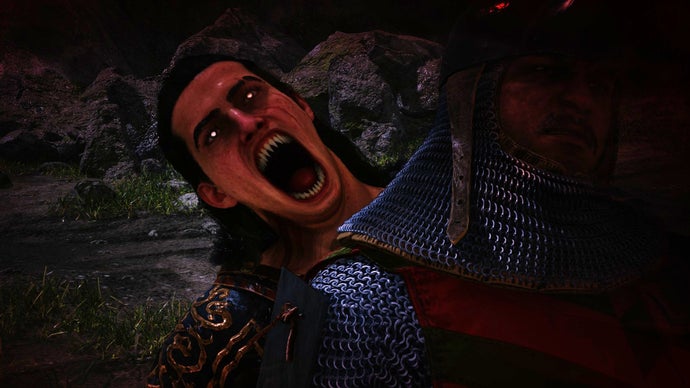
Coen, the hybrid vampire-human protagonist of The Blood of Dawnwalker, spends a lot of time visibly uncomfortable. That's because players have discovered a morality loophole in the game's blood-drinking mechanic, and they're exploiting it with gleeful efficiency.
The Blood of Dawnwalker, developed by Spicy Horse and published by Raw Fury, centers on feeding Coen's vampiric hunger. The catch: how you feed shapes his character and affects the story. Drink from humans, and you become a monster. Drink from animals, and you maintain your humanity. Simple moral framework. Except players have realized that rats, the smallest available prey, let them feed infinitely without narrative consequences.
One player has forced Coen to consume nine million rats.
The genius of this exploit lies in the game's design intent versus player creativity. Spicy Horse built the morality system to force tough choices. Hunt humans and gain power at the cost of your soul, or stay weak but righteous. Instead, players discovered that rats count as ethical feeding. Nine million of them. Coen hates every second of it. His voice lines are drenched in disgust and resignation. "This is not a nice thing to do," he'll mutter after another rodent gets slurped dry. The developers left his complaint voice lines in the game, which makes the rat-grinding experience actively comedic. You're watching a character suffer through your ethical workaround, and he knows exactly what you're doing.
This reflects a broader pattern in player behavior across RPGs and morality-driven games. When systems present moral choices, players don't always engage with the intended emotional weight. Instead, they hunt for loopholes. They want power without consequence. The fact that Coen audibly protests makes the rat-grinding funnier than if the game treated each feeding identically. You're not just gaming the system; you're making the protagonist miserable in the process, and the game acknowledges your cruelty through his degraded reactions.
The Blood of Dawnwalker launched to solid reviews on PC, with critics praising its narrative depth and atmospheric take on vampire fiction. The rat-grinding phenomenon represents the kind of emergent player behavior that keeps indie games alive in gaming discourse long after launch. It's not breaking the game or exploiting a glitch. It's finding the path of least resistance through a system designed to limit options, then weaponizing that path against the character's expressed wishes.
The ethical muncher playstyle reveals something about how players interact with morality systems in games. We want agency. We want options. When presented with a binary choice between become-a-monster-or-stay-weak, grinding nine million rats to circumvent both outcomes feels like a victory, even if Coen is actively suffering through your victory lap. The developers created a system where doing the right thing means living with weakness. Players found a way to do the right thing while maintaining power, and they're enjoying every disgusted groan from their vampire protagonist in the process.