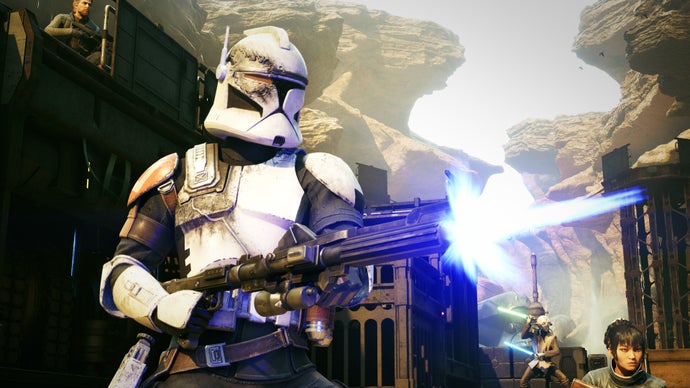
Bit Reactor furloughed the majority of its workforce before launching Star Wars Zero Company last week, leaving developers unpaid and without clear employment status, according to reports. The studio's decision to cut staff immediately ahead of the game's release signals deeper financial trouble within the organization and raises questions about how the title will be supported post-launch.
Star Wars Zero Company is a tactical squad-based game set in the Star Wars universe. Bit Reactor developed the game as a licensed title within Lucasfilm Games' portfolio. The studio had built the project over an extended development cycle, but the timing of mass furloughs just before launch suggests the publisher or studio hit a financial wall.
Furloughing most staff before a game ships creates immediate operational problems. Post-launch support, bug fixes, balance patches, and community engagement typically demand active developer attention during the critical window after release. Without a full team, the game enters the market vulnerable to technical issues and player complaints that the depleted staff may struggle to address quickly. Players furloughed and unpaid developers send conflicting signals about the project's long-term viability.
The studio's decision also reflects the broader instability in video game development. Major publishers have cut thousands across 2024, from Microsoft to Sony to Take-Two. Mid-size independent developers and smaller studios bear additional pressure when projected revenues don't materialize or publishing partners reduce funding mid-project. Star Wars titles carry higher production costs and higher expectations, making them riskier ventures if market conditions shift.
Lucasfilm Games has released several games across platforms in recent years, including high-profile titles and smaller experiments. The fate of Star Wars Zero Company depends partly on its commercial reception and whether Lucasfilm Games continues backing the project financially. If the game underperforms, Bit Reactor employees face an uncertain situation with minimal runway and no active payroll.
For players, the furloughs create practical concerns. Will the game receive patches? How long before the servers shut down if player counts drop? Will promised post-launch content arrive? Developer turnover and financial instability historically correlate with abandoned games and dead multiplayer servers within months of launch.
The Star Wars gaming space has seen both successes and failures. EA's Star Wars Battlefront II recovered from a rough launch through dedicated support, while other licensed games failed to gain traction. Bit Reactor now operates in that uncertain middle ground where early sales determine whether furloughed staff return to work or face permanent job loss.
This incident underscores the human cost of game industry volatility. Developers shipped a product and faced employment termination without guarantees of severance or when work might resume. It also highlights how publishing strategies and financial planning directly affect working conditions. When studios furlough teams before launch rather than after, it signals they bet against their own product succeeding or that their financial partners pulled support prematurely.
Star Wars Zero Company now competes in a crowded market with minimal momentum from its creators. The game's success or failure will determine whether Bit Reactor survives and whether its furloughed staff ever return.