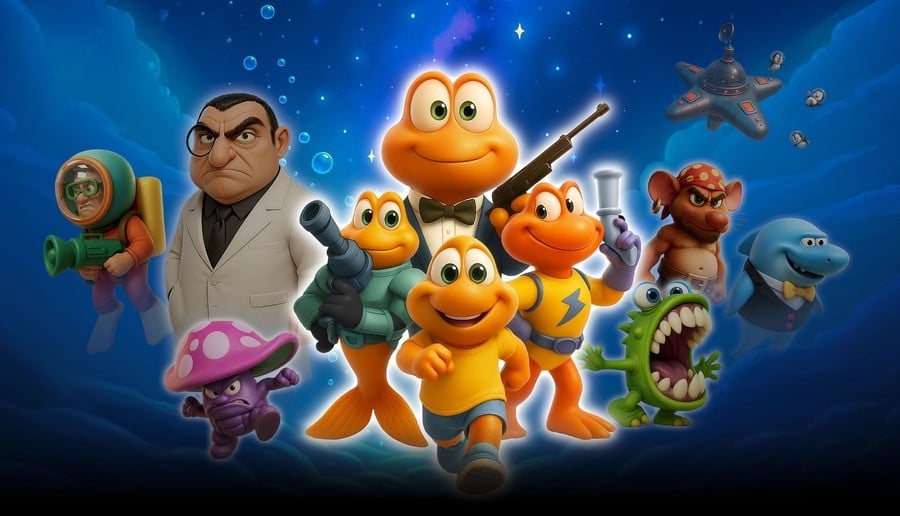
Chris Sorrell, the co-creator of the 1989 platformer James Pond, has leveled sharp criticism at a remake leveraging AI-generated content, calling the project disrespectful and soulless. Sorrell's blunt response, "I hope they choke on an AI-generated fishbone," reflects the original developer's frustration with how his creation is being reimagined without input from the people who built it.
James Pond launched on the Commodore 64 and arrived during the 8-bit era's golden age of platformers. The series spawned sequels across multiple platforms and maintained a cult following among retro gaming enthusiasts. Sorrell's involvement as a co-creator gives him standing to speak on the franchise's legacy and artistic direction, even if he no longer holds the intellectual property rights.
The remake's heavy reliance on AI-generated assets cuts to a broader tension surfacing across game development. As generative AI tools proliferate, studios face pressure to accelerate production and reduce costs. Asset creation typically demands significant human labor. AI systems promise to bypass traditional workflow bottlenecks. But original creators and players increasingly view AI-heavy projects as hollow imitations that strip away the craftsmanship and intentionality embedded in the original work.
Sorrell's criticism taps into something deeper than nostalgia. The James Pond remake represents a specific creative choice: rather than hire artists, animators, and designers to rebuild the game with new vision, the remake's producers opted for algorithmic generation. That approach eliminates human decision-making from art direction, character design, and environmental detail. The result feels generically competent rather than distinctly authored.
This dispute arrives as the industry grapples with AI's role in game development. Some studios use AI tools for specific, bounded tasks like texture upscaling or placeholder asset generation. Others pursue more aggressive automation that reduces dependency on human creators. Neither approach sits neutral. Players and legacy creators view the distinction as binary: either AI serves human vision, or it replaces human vision entirely.
The James Pond remake also reflects who owns franchise IP after decades pass. Sorrell and his co-creator no longer control James Pond. The current rights holder pursued this remake strategy without consulting the original developers. That disconnect highlights how legacy franchises can be revived in ways that contradict the vision of their architects. Sorrell cannot stop the remake, but he can speak publicly about it.
His response landed in industry discourse at a moment when AI-generated game content faces mounting skepticism from players. Recent indie titles marketed as AI-driven received backlash. Players reward human creativity and punish perceived shortcuts. Remake projects carry particular weight because players compare them directly to the originals. If a remake underperforms its source material, audiences attribute the gap to inferior execution. If that execution stems from algorithmic generation rather than human craftsmanship, that gap widens into a crater.
The James Pond situation will likely become a test case. How players receive the final product will signal whether AI remakes can succeed commercially and critically. If the remake underperforms, Sorrell's criticism gains validation. If it sells well and earns positive reviews, it proves audiences accept AI-assisted game revival. The answer shapes how other studios approach beloved franchises sitting in vaults, waiting for revival.