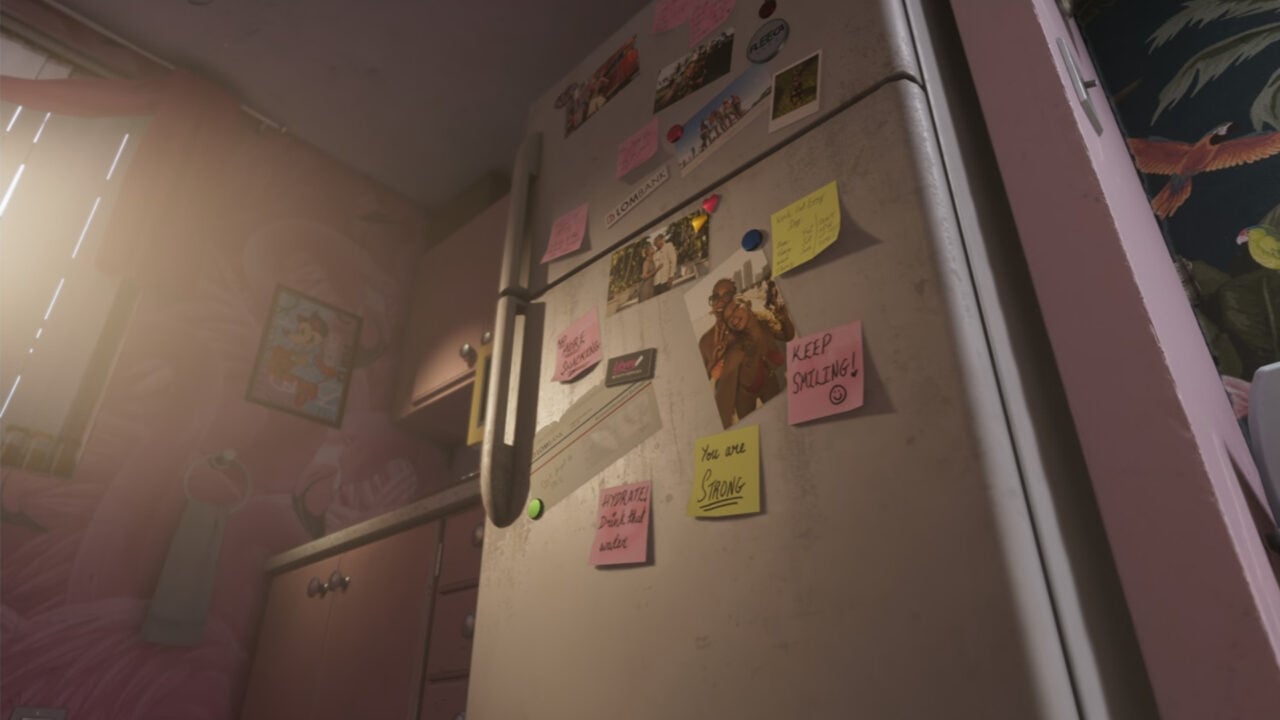
# Jason and Lucia's Fridge Becomes Unhinged Symbol of Game Design Obsession
Kotaku's latest deep dive into environmental storytelling surfaces an unexpected obsession: the contents of a refrigerator in an unnamed title starring characters Jason and Lucia. The piece doesn't just catalog what's inside. It fixates on what the design choice reveals about developer commitment to world-building through mundane detail.
The fridge represents a recurring tension in modern game design. Players notice everything now. They clip through walls to inspect interiors, zoom cameras into kitchens, and document environmental clues that developers never expected anyone to examine. When a fridge appears in a game, filling it with generics sends a message. Filling it with thought-out items sends another.
In Jason and Lucia's case, the author identifies a pattern that borders on obsessive avoidance. The fridge contains condiments, leftovers, beverages, and various processed items. Conspicuously absent: fresh produce. No vegetables appear on the shelves. No fruits sit in the crisper drawer. For a game intent on establishing realistic character lives, this detail reads as either oversight or intentional character commentary about nutritional choices.
The article digs into why this matters. Game worlds anchor believability through accumulation of small choices. A character's fridge tells us about their lifestyle, priorities, budget constraints, and daily habits. What Jason and Lucia stock reveals who they are without a single dialogue line. The problem emerges when environmental storytelling breaks its own internal logic. If these characters cook and eat at home, they buy groceries. Real grocery shopping includes produce. The absence becomes noise.
Kotaku frames this as symptomatic of larger development practices. Studios allocate resources to major set pieces, cutscenes, and gameplay systems. Refrigerators receive secondary treatment. Artists populate them with repeated assets and standard food item models. Nobody briefs the team on character dietary narratives. Nobody checks whether the contents align with established character backgrounds or dialogue about family meals.
The piece touches on player psychology too. Modern gaming audiences catch these inconsistencies because modern games train them to look. The Sims pioneered fridge examination decades ago. Fallout franchises reward players for scrounging kitchens for supplies. Baldur's Gate 3 made every container interactive, spawning community spreadsheets about NPC possession patterns. Jason and Lucia's developers crafted environments expecting scrutiny. That scrutiny revealed gaps.
This connects to broader discourse around environmental design philosophy. Some studios embrace minimal environmental storytelling, avoiding contradiction through restraint. Others commit fully, hiring narrative designers to backstory every container. The middle ground, where Jason and Lucia operate, creates friction. Players detect half-realized intentions.
The author's plea for vegetables reads lightly but carries weight. Add lettuce. Add apples. Add frozen broccoli. These additions cost minimal resources but signal that someone thought through these lives. They transform a fridge from a asset into a character statement.
Jason and Lucia's refrigerator becomes a Rorschach test for how seriously developers take their own worlds. For some readers, it's nothing. For detail-oriented players, it's everything. The fact that Kotaku dedicated energy to documenting this inconsistency suggests the gaming press increasingly grades games on completeness of environmental narrative. Studios ignoring fridge contents ignore an audience that's learned to read refrigerators like text.