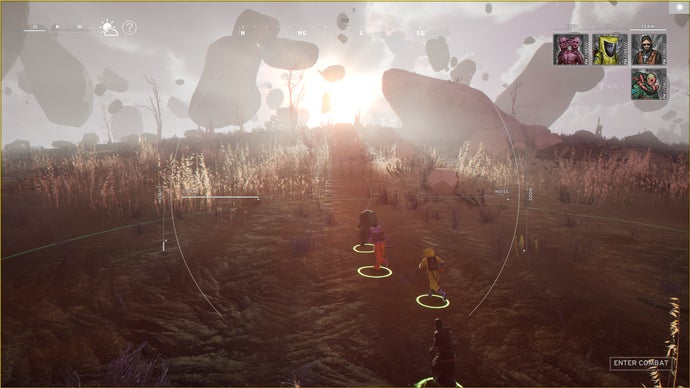
Hello Andromeda, a Kyiv-based studio, is developing Fog'n'Silence, an ambitious party-based tactical RPG that blends open world exploration with Death Stranding's traversal mechanics and twisted character narratives. The game guides players through the Afterlife, commanding a roster of warped human characters across a sprawling environment.
The studio's creative vision merges multiple genres into one cohesive experience. Death Stranding's methodical journey mechanics form the foundation for world movement, while turn-based tactical combat borrowed from party RPG traditions structures encounters. The open world setting allows players freedom to explore and tackle objectives non-linearly, a structure that separates Fog'n'Silence from more linear narrative-driven games.
The Afterlife setting provides thematic grounding for the game's darker tone. Rather than playing as conventional heroes, players manage a party of twisted, corrupted humans navigating this liminal space. This inverts typical RPG power fantasy expectations. Characters aren't knights or mages but broken versions of ordinary people, which reframes the player's investment in combat and story progression. The studio leans into psychological horror and existential themes rather than traditional fantasy or sci-fi tropes.
Hello Andromeda's location in Kyiv positions them within Eastern Europe's growing indie game development scene, though the studio has maintained operations despite regional instability. The team's ambition with Fog'n'Silence demonstrates confidence in blending established mechanics from beloved titles like Death Stranding with tactical RPG depth.
The commercial landscape for niche RPGs has shifted favorably in recent years. Baldur's Gate 3's massive success proved demand exists for party-based tactical systems with narrative depth. Indie studios leveraging established mechanical frameworks while crafting distinct thematic identities now find receptive audiences. Fog'n'Silence positions itself between AA production values and indie creative freedom, a sweet spot that has attracted player attention and funding support.
Party-based tactical combat retains strong appeal across console and PC platforms. The genre experienced revival through titles like Divinity: Original Sin 2, Persona 5 Royal, and Fire Emblem: Three Houses. Each demonstrated that turn-based combat remains compelling when paired with meaningful character development, strategic depth, and narratively integrated party dynamics. Fog'n'Silence inherits this renewed interest.
Death Stranding's influence on game design deserves attention here. Kojima Productions' 2019 title introduced traversal as core gameplay rather than mere navigation between combat encounters. The stamina system, cargo management, and terrain interaction created tension during "boring" moments. Fog'n'Silence appears to adopt this philosophy, making exploration itself engaging rather than filler between tactical battles.
The Afterlife framing supports both the narrative themes and mechanical design. In Death Stranding, traversal obstacles carry metaphorical weight. Similarly, navigating the Afterlife with corrupted characters likely presents environmental and psychological challenges beyond simple pathfinding. This integration of setting, mechanics, and story represents sophisticated game design thinking.
Release details remain limited, but the trailer's reception indicates strong early momentum. For players fatigued by conventional RPG storytelling and combat systems, Fog'n'Silence offers genuine novelty through its thematic commitment and mechanical fusion. The open world party-based tactical RPG subgenre remains underexplored, providing room for Hello Andromeda to carve distinct territory within an increasingly crowded indie RPG market.