# Viral Chinese Cow Cartoon Becomes One Of The Most Profitable Movies Ever Made
The Chinese animated feature "Niu Lai" has achieved something remarkable. What started as a mockery magnet transformed into a financial juggernaut, delivering returns that place it among the most profitable films ever produced.
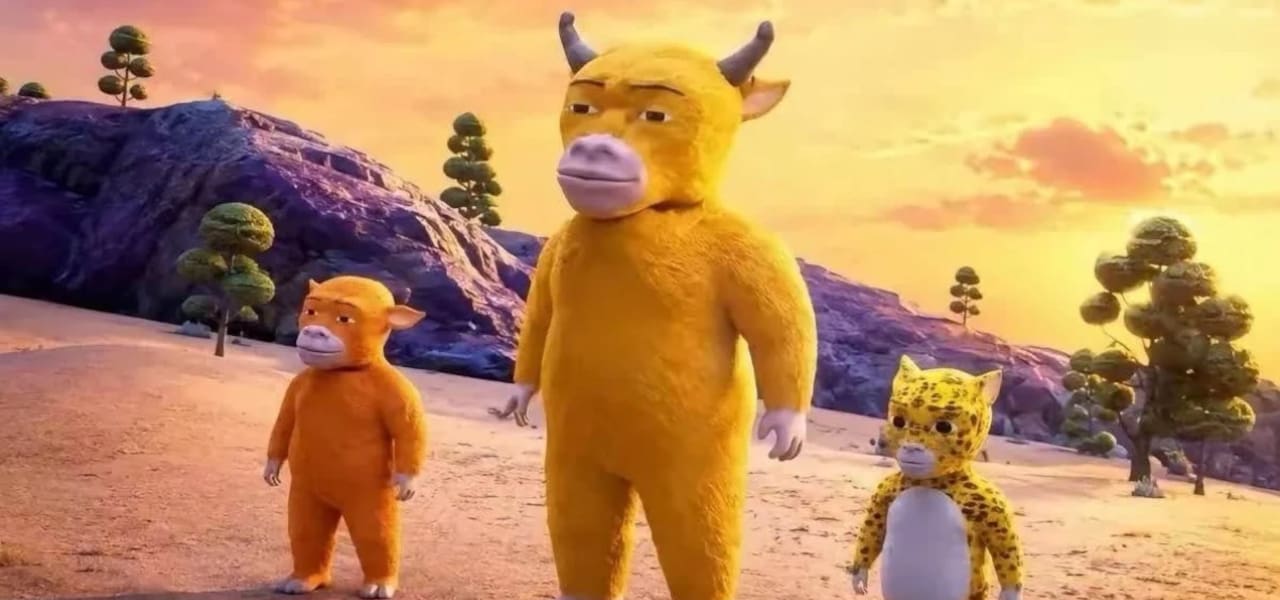
The film centers on a cow character that caught fire on social media. Initial reception treated the movie as a punchline. Reviewers and audiences criticized the rudimentary animation quality and basic production values. The viral moments mocking the film seemed destined to define its legacy.
Instead, the cow kept laughing. "Niu Lai" exploded at the box office, generating astronomical revenue relative to its production budget. The gap between what the film cost to make and what it earned ranks among the widest in cinema history. This disparity places it in rare company alongside ultra-low-budget breakouts and franchise installments that dominated their respective markets.
The phenomenon reveals something about modern entertainment markets. Viral mockery no longer guarantees failure. Social media amplification, even negative amplification, drives awareness and curiosity. A cow that became a meme became a reason to buy a ticket. Audiences deliberately chose to witness the object of ridicule firsthand. That choice translated directly into ticket sales.
The success carries implications for animation studios and producers working outside major Western markets. Chinese animation has historically struggled for international recognition despite massive domestic audiences. "Niu Lai" demonstrates that technical polish and Western aesthetic standards matter less than cultural resonance and audience engagement. A film that Western critics would dismiss as crude animation became a cultural event in its home market.
The movie's performance also challenges conventional wisdom about animated features. Hollywood studios invest hundreds of millions into properties anchored by recognizable intellectual property, established franchises, or star voice actors. "Niu Lai" relied on none of these elements. A cow character and viral momentum proved sufficient.
Budget-to-earnings ratios this extreme typically reflect either exploitation of niche audiences or capture of mainstream curiosity. "Niu Lai" achieved both. The film attracted viewers specifically because it had become notorious, turning notoriety into commercial advantage. Every negative comment, every mocking video, every social media post questioning the animation quality functioned as free marketing.
The film's trajectory illustrates how digital platforms reshape entertainment economics. Traditional gatekeepers like film critics and studio executives lost predictive power. Viral velocity and meme potential became more valuable than production budgets. A movie that should have disappeared quietly instead became a case study in unexpected profitability.
"Niu Lai" will likely inspire imitation. Chinese studios now understand that animation quality matters less than cultural penetration and social media resonance. Studios operating in other non-Western markets may adopt similar strategies, prioritizing viral potential over technical achievement. The financial returns justify the approach.
The cow's ascent from mockery to massive profitability represents a genuine shift in how entertainment achieves commercial success. Production value no longer determines audience size. Engagement does. Controversy does. Cultural saturation does. "Niu Lai" made a fortune by becoming impossible to ignore.