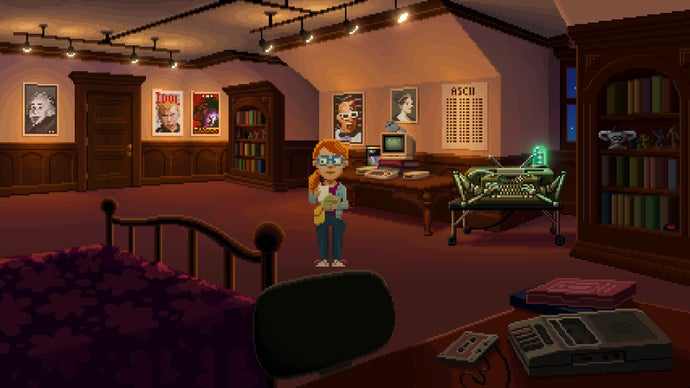
Ron Gilbert funded Thimbleweed Park 2 through an unconventional approach that sidesteps traditional publisher structures entirely. The legendary adventure game designer rejected standard publishing deals, citing frustrations with how modern publishers operate and the constraints they impose on creative projects.
Gilbert, the architect behind classics like The Secret of Monkey Island and Day of the Tentacle, secured financing for the sequel through methods outside the conventional publisher-developer relationship. He did not disclose exact funding mechanisms, but the approach reflects growing tension between auteur game creators and traditional publishing infrastructure.
The adventure game renaissance has been slower than many expected. While the genre is far from dead, it occupies a niche market compared to action-driven titles that dominate AAA publishing budgets. Publishers remain risk-averse toward point-and-click adventures, viewing them as commercially unreliable. This skepticism persists despite strong critical reception and cult followings for recent indie adventures and occasional mainstream successes.
Gilbert's frustrations center on publisher demands that typically include aggressive monetization strategies, live service elements, and design compromises that prioritize engagement metrics over artistic vision. Modern publishing deals frequently require developers to chase player retention mechanics and seasonal content cycles, approaches fundamentally misaligned with adventure game design philosophy. Publishers also impose strict timelines and budget caps that conflict with the iterative, puzzle-crafting process adventure games demand.
Thimbleweed Park 2, arriving in 2028, sits in an unconventional narrative position. It functions neither as a true sequel nor prequel, instead existing as a spiritual continuation that respects the original's standalone story. This unusual structure mirrors Gilbert's creative independence. The original Thimbleweed Park, released in 2017, successfully crowdfunded through Kickstarter and generated strong sales without publisher backing. That success provided proof of concept for fan-funded adventure development.
The 2028 release window reflects realistic development timelines for Gilbert's meticulous design process. Adventure games require extensive dialogue writing, puzzle construction and testing, voice acting coordination, and iterative player testing. Gilbert's approach to adventure design emphasizes quality and replay value over rushed production schedules.
This funding model carries implications beyond Gilbert's personal project. Successful developer self-publishing in 2024 and 2025 demonstrates that adventure game audiences will financially support projects when given direct access. Platforms like Kickstarter, Fig, and direct indie distribution channels provide viable alternatives to publisher relationships. Gilbert's strategy suggests established creators with recognizable names can leverage their reputation to secure funding independently.
The broader context matters. The game industry contracted significantly in 2023 and 2024, with major publishers consolidating portfolios and canceling projects mid-development. Meanwhile, indie developers captured increasing market share and critical attention. Adventure games specifically saw renewed interest with titles like Psychonauts 2, Monkey Island remake, and smaller indie successes proving audience demand persists.
Gilbert's public criticism of publisher models also carries weight. His statements reach both industry peers and players, potentially influencing how younger developers negotiate with publishers or consider self-publishing routes. When creators of Gilbert's stature publicly reject publisher infrastructure, it signals that alternative paths exist for projects publishers deem too risky.
Thimbleweed Park 2 represents a test case for adventure game viability outside traditional structures. Its 2028 release will provide concrete data on whether unconventional funding and independent development can sustain quality adventure games at scale.