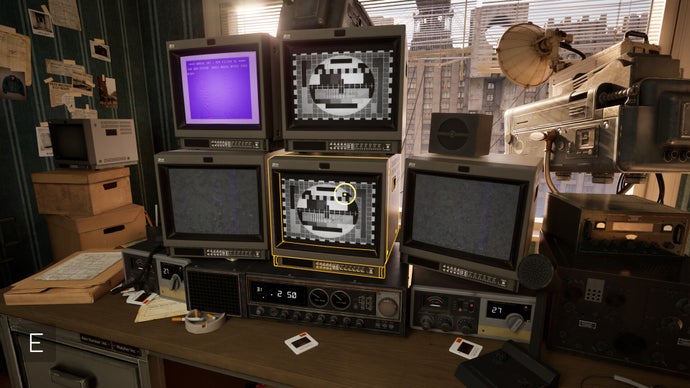
The Watcher positions itself as a surveillance-focused thriller that leverages Unreal Engine's visual fidelity to create an unsettling atmosphere of state control and voyeurism. The game casts players as enforcers of a totalitarian regime, tasked with monitoring an apartment building across the way using an arsenal of spying equipment. The core loop involves detecting behavioral anomalies in residents' daily routines, feeding the paranoid machinery of authoritarian oversight.
The Unreal Engine foundation delivers polished environmental detail. The developer has invested in making surveillance tools visually compelling, from the interface design to the apartment layouts players scrutinize. This production quality grounds the thriller concept in tangible, recognizable spaces rather than abstract systems. The game trades on the discomfort of watching people through windows, a concept that channels real privacy anxieties into interactive form.
The reviewer flagged one structural concern: dialogue saturation. The trailer apparently leans hard into exposition and narrative explanation, potentially undermining the game's atmospheric tension. Surveillance games often work best when they let players draw their own conclusions from observed behavior, rather than having characters explain every moral implication. Excessive talking can dilute the creeping unease that defines the genre. Games like Papers, Please and Return of the Obra Dinn proved that restraint in exposition amplifies player discomfort and agency.
The Watcher enters a sparse market niche. Surveillance-focused gameplay rarely reaches mainstream attention, but when executed well, it generates critical discussion around power dynamics and complicity. The game's totalitarian framing suggests developer intent to provoke ethical reflection rather than provide straightforward entertainment. That's different from most thrillers, which typically position players as resistance heroes. Here, players inhabit the oppressor role, which carries narrative risk but also thematic depth.
The apartment-building setting offers modular storytelling potential. With multiple residents exhibiting different patterns, the game can layer narrative through observation. Subtle details, routine breaks, and suspicious exchanges become readable once players learn what "normal" looks like. This observational design mirrors the actual psychology of surveillance work, where pattern recognition defines the job.
Release details and platform availability remain unclear from available information, but the Unreal Engine foundation suggests multi-platform deployment is likely. PC seems the obvious primary target for a narrative-driven surveillance sim, though console versions could reach broader audiences if the UI translates cleanly to controllers.
The core question facing The Watcher is whether it commits to player agency and atmospheric storytelling or leans into plot-driven exposition. Surveillance games thrive on silence, implication, and player interpretation. Every line of dialogue must earn its place. If the final product trusts players to understand moral complexity without constant narrative hand-holding, The Watcher could occupy meaningful space in a genre desperately short on quality entries.