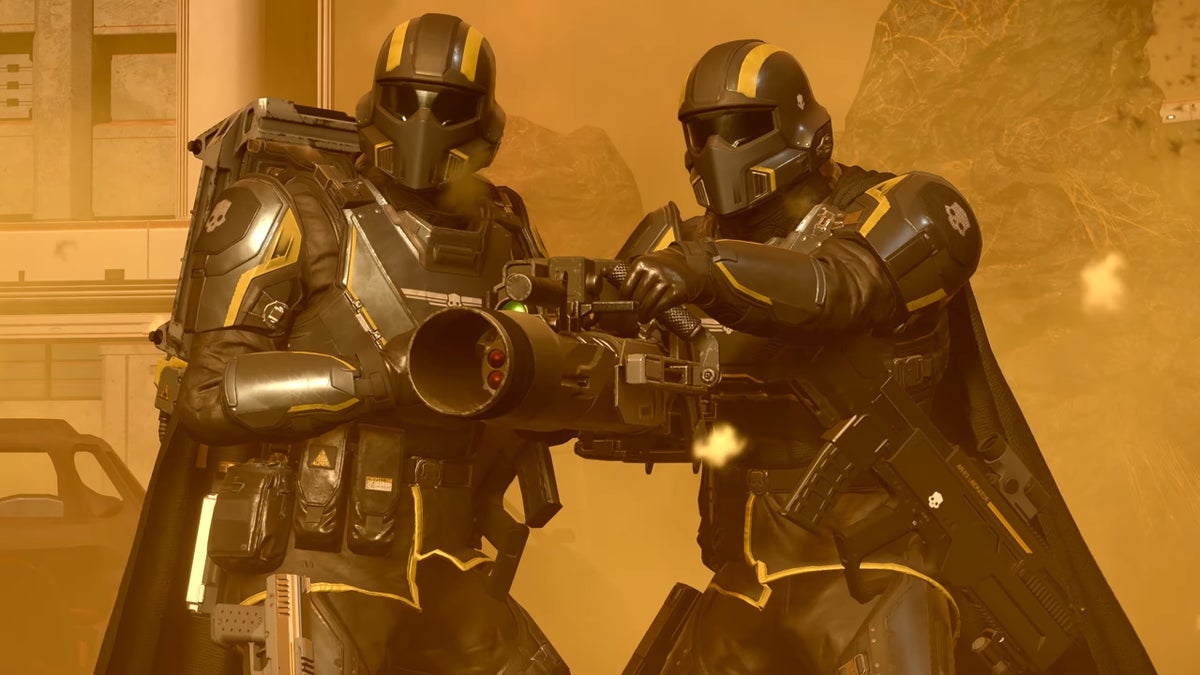
Arrowhead Game Studios will not develop Helldivers 3 unless the studio can create something radically different from its breakout success, Helldivers 2. Johan Pilestedt, chief creative officer at Arrowhead, made this stance clear in recent remarks about the studio's future direction and their unannounced prototype game in development.
Pilestedt emphasized that a Helldivers 3 "only makes sense" if the game diverges so sharply from Helldivers 2 that both titles can coexist without cannibalizing each other's player base. This represents a pragmatic stance from leadership at a studio riding the wave of Helldivers 2's unexpected cultural explosion. The 2024 cooperative shooter became a cultural phenomenon, drawing millions of players across PlayStation 5 and PC platforms within months of launch. The game's blend of arcade-style action, friendly fire mechanics, and chaotic four-player warfare proved that live service shooters still command massive audiences when executed with personality and mechanical depth.
The condition Pilestedt outlined reveals Arrowhead's awareness of a fundamental business problem. Creating Helldivers 3 as an iterative sequel risks fragmenting the existing community. Players would face a choice between staying with the established Helldivers 2, which already has refined systems, cosmetics, battle pass progression, and years of content investment, or migrating to a new entry. Pilestedt's requirement for radical stylistic divergence acknowledges this reality head on. The studio needs a threequel distinct enough in tone, gameplay loop, or visual presentation that players see it as a separate experience rather than a replacement.
Alternatively, Pilestedt noted a secondary condition for Helldivers 3 development. If Helldivers 2's playercount collapsed dramatically, a new entry might make financial sense as a soft reboot or fresh start. That threshold remains extremely distant. Helldivers 2 continues to attract concurrent players numbering in the hundreds of thousands, with sustained engagement across regions and platforms nearly a year and a half after launch.
The studio's focus instead turns to an unannounced prototype project. Arrowhead remains coy about specifics, but the prototype represents the studio's first major initiative beyond supporting and expanding Helldivers 2. This signals a deliberate strategy to diversify the studio's output rather than immediately chase sequels or franchise extensions. Arrowhead's experience with live service longevity and community management positions them well to experiment in new genres or gameplay spaces while maintaining Helldivers 2's post-launch support.
This approach contrasts sharply with industry norms. Most studios with a massive hit immediately greenlight sequels and spin-offs to capitalize on momentum and franchise recognition. Arrowhead's caution suggests confidence in Helldivers 2's staying power and a reluctance to oversaturate the market with Helldivers branded content. The studio learned from its long history with the original Helldivers and its free-to-play iterations. Long-term player satisfaction outweighs short-term sequel revenue.
For the broader gaming industry, Arrowhead's philosophy offers a counterpoint to aggressive franchise sequelization. The studio proves that a single well-maintained live service can sustain revenue and engagement for years without requiring numbered sequels. Whether this approach holds when Helldivers 2's playerbase eventually contracts remains to be seen, but Arrowhead's threshold for Helldivers 3 development remains steep.