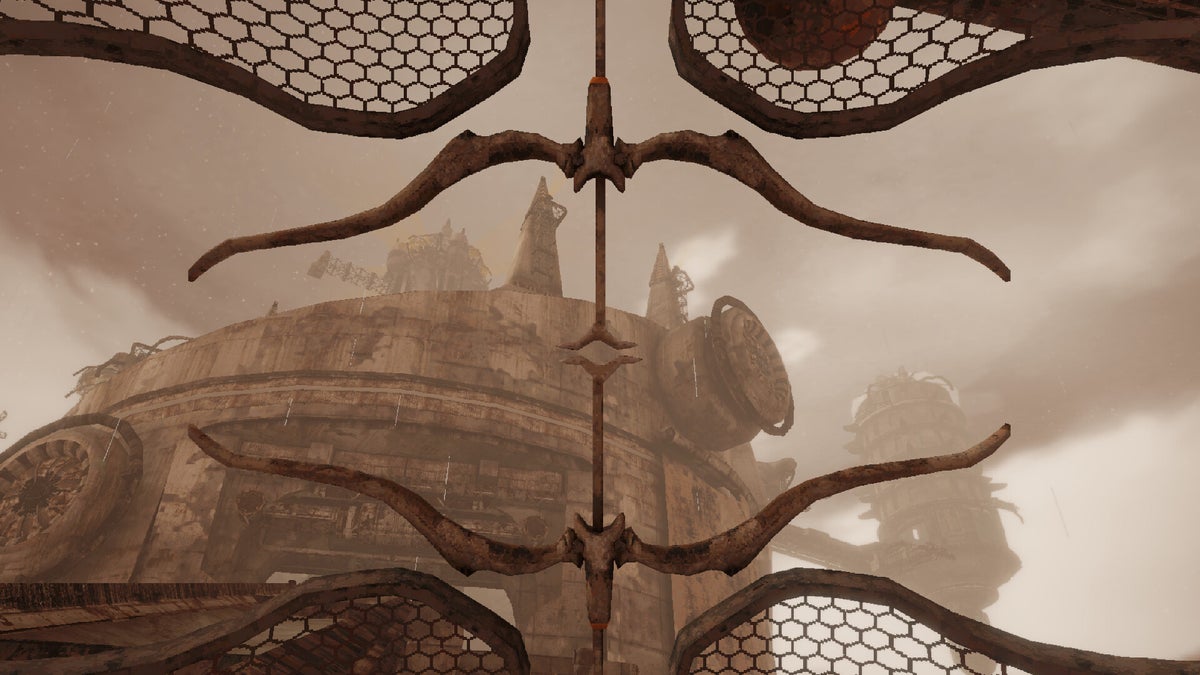
HELENA: Cloud District launches next week as a photography-focused exploration game built around megastructure aesthetics. The title centers on capturing imagery within a vast, alien world using a specialized camera system. Developer focus on visual storytelling through photography mechanics sets this apart from standard narrative-driven adventures.
The game taps into a growing niche within indie gaming: titles built around environmental discovery and documentation rather than traditional combat or puzzle-solving. Hyper Light Breaker and Outer Wilds demonstrated player appetite for worlds designed to reward observation and visual curiosity. HELENA: Cloud District follows this blueprint by making the camera itself the primary tool for engagement.
The megastructure aesthetic proves particularly resonant with contemporary gaming audiences. Games like Starfield, No Man's Sky, and the recent Hypnos leverage cosmic architecture and massive artificial constructs as visual anchors. These environments invite players to stop, examine details, and photograph discoveries. HELENA: Cloud District appears engineered specifically for this playstyle. The "stunning" visual presentation mentioned in coverage suggests the developers prioritized art direction and environmental density.
Photography mechanics have gained traction in indie circles. Titles like Viewfinder, A Short Hike, and Pokemon Snap sequels recognized that players enjoy curating images from game worlds. These systems bypass traditional progression loops. Instead of collecting items or experience points, players collect visual moments. This appeals to players fatigued by conventional game structures.
The timing matters. AAA publishers remain focused on live-service retention and monetization systems. Indie developers increasingly occupy the space where games function as tools for personal creative expression. HELENA: Cloud District fits that positioning. Its launch next week arrives amid heightened interest in exploration games post-Elden Ring and post-Zelda: Tears of the Kingdom cycles. Players actively seek new worlds to inhabit.
Marketing challenges remain real. The piece notes algorithmic dominance makes discoverability difficult for mid-tier indie releases. Coverage from Rock Paper Shotgun and similar outlets helps bridge that gap. Enthusiast publications remain discovery vectors for games that don't fit mainstream AAA categories. HELENA: Cloud District benefits from early positive press focusing on visual appeal and mechanical novelty.
The "strange camera" description hints at systems beyond simple screenshot tools. Specialized photography mechanics in modern games often include filters, lens adjustments, or narrative integration. The camera might function as a storytelling device or unlock world details. This deepens gameplay beyond passive observation.
Platform availability remains unclear from available information, though PC appears likely given the outlet covering it. Console ports may follow depending on performance and sales performance.
HELENA: Cloud District represents indie gaming's confidence in unconventional core mechanics. Rather than iterating on established formulas, the game places a specialized tool at the center of player interaction. The megastructure setting provides visual spectacle. The photography framework provides purpose. This combination targets players burned out on traditional progression systems and hungry for genuine exploration experiences.
The launch next week will reveal whether this laser-focused design reaches its intended audience effectively.