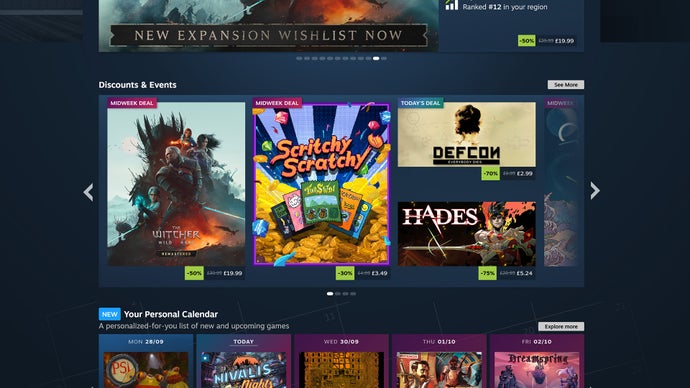
Valve is overhauling Steam's discounts and events section. The platform will shift from hand-curated, site-wide sales highlights to algorithmic recommendations tailored to individual users. This change continues Valve's ongoing effort to personalize the Steam store experience across multiple UI elements.
Currently, Steam's discounts and events section sits prominently below the featured ad and recommended games. Valve's curation team selects sales that apply broadly to the Steam audience. The new system will instead generate personalized recommendations based on each user's browsing history, purchase patterns, wishlist activity, and gameplay preferences.
The move reflects a broader trend in how Steam operates. Valve has aggressively widened and customized almost every section of the platform in recent years. The storefront increasingly relies on machine learning to surface content. Featured games, recommendations, and now discounts will flow through algorithmic filters designed to match individual players with products they're statistically likely to purchase.
Valve's rationale is straightforward. Personalized discount recommendations convert higher than generic sales announcements. When players see price drops on games matching their demonstrated interests, they're more inclined to buy. The algorithm learns from millions of transactions and behavioral signals across Steam's 120+ million monthly active users. It identifies patterns about which games appeal to which players and optimizes for purchase intent.
This strategy serves both Valve and publishers. Valve increases transaction volume and average order value. Publishers gain targeted exposure to their ideal audience rather than competing for attention in a crowded, one-size-fits-all sales section. Smaller indie games benefit particularly because algorithmic promotion can surface niche titles to the exact players most likely to appreciate them, whereas curated sections often favor bigger names and established franchises.
However, the shift away from curation raises questions about discoverability and fairness. Hand-picked sections introduce human judgment and can highlight unexpected gems or underrated titles. Algorithms optimize for engagement and spending, not artistic merit or community benefit. Games that fail to generate strong engagement signals may disappear from algorithms entirely, creating invisible tiers where popular games get promoted endlessly while others fade.
The change also reflects Valve's data advantage. Steam has unmatched insight into gaming preferences across all genres and player demographics. Competitors like Epic Games Store and GOG lack this granular behavioral data. Valve's algorithms become more powerful and effective the more users interact with Steam, creating a feedback loop that reinforces the platform's dominance.
This isn't Valve's first algorithmic restructuring. The company has progressively replaced editorial decision-making with personalization across wishlists, recommendations, and featured content. Each change aims to increase relevance and reduce noise. From Valve's perspective, algorithms beat human curation at scale. From players' perspective, personalization can feel like manipulation, particularly when it's designed explicitly to encourage purchases.
The timing matters too. As Steam's catalog exceeded 100,000 titles, discovery became critical. Hand curation couldn't possibly highlight everything. Algorithms became necessary infrastructure. But necessity and profit alignment converge here. Valve gets to optimize for engagement while claiming to improve user experience through personalization.
The discounts and events shift goes live soon. Players should expect to see different sales recommendations than their friends, based on individual preference patterns rather than global Valve selections.