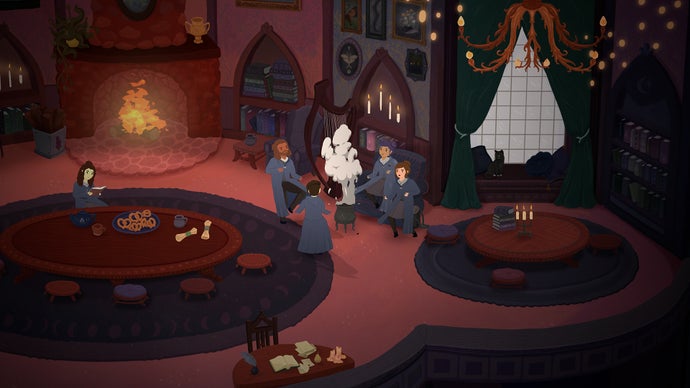
Songs of Glimmerwick launched today as a magic school RPG from the studio behind Eastshade, the contemplative exploration game that prioritized environmental storytelling and player choice over combat. The new title channels that same philosophy into an academy setting where players learn spellcraft and reshape the world through music and magic.
The game positions itself in a crowded genre. Magic school narratives dominate indie and mainstream gaming alike. Titles like Hogwarts Legacy, Little Witch Academia: Chamber of Time, and various smaller academy-focused RPGs have carved out audiences hungry for structured magical education fantasies. Failbetter Games, known for their narrative depth in Sunless Sea and Fallen London, has been exploring Terry Pratchett adaptations. Meanwhile, indie studios continue mining the Harry Potter-adjacent space for fresh takes.
Songs of Glimmerwick differentiates itself by centering music as a core mechanic. Players wield instruments, particularly flutes, as spellcasting tools that literally reshape terrain and environments. This environmental manipulation angle mirrors Eastshade's focus on how player actions ripple through game worlds. Rather than combat-driven progression, the game emphasizes exploration, magical discovery, and tangible world-building consequences tied to musical performance.
The developer's previous work in Eastshade established them as careful builders of atmospheric, player-driven experiences. That studio proved audiences will engage with slower-paced games that prioritize exploration and choice mechanics over traditional progression loops. Eastshade's success on PC and Nintendo Switch showed there exists a dedicated market for games that trust players to find meaning in environment interaction rather than quest markers and boss battles.
The RPG genre itself has fragmented significantly. While AAA studios dominate the action-RPG space with titles like Dragon's Dogma 2 and Baldur's Gate 3, the CRPG and narrative RPG segments have opened for smaller studios willing to experiment. Songs of Glimmerwick targets players fatigued by combat-heavy progression and drawn to games like Spiritfarer, A Short Hike, and Dinkum, which prioritize atmosphere and player agency.
Early reception from the demo suggests the core loop resonates. Players found the flute-based spell system intuitive and the environmental transformation mechanics satisfying. The academy setting provides structure without rigid questlines, offering players flexibility in how they engage with lessons, friendships, and magical development. This aligns with contemporary indie game design philosophy that respects player autonomy.
The launch arrives during a period when magic school games face both saturation and opportunity. Saturation because publishers recognize the genre's appeal. Opportunity because execution remains paramount. Poorly designed magic school games feel generic and narrative-thin. Songs of Glimmerwick appears designed to lean into what made Eastshade compelling. the developers understand how atmosphere, music design, and environmental interaction create meaning in games.
The flute mechanic carries particular weight. Instead of spell slots and mana bars, players perform musical pieces that trigger magical effects. This ties gameplay directly to creative expression and environmental harmony, thematically reinforcing the game's earth-shaping premise. It's the kind of mechanical philosophy that separates memorable indie titles from forgettable ones.
For players tired of combat-focused RPGs or seeking a gentler approach to magic school fantasy, Songs of Glimmerwick offers an alternative rooted in proven indie sensibilities. The developers have demonstrated they understand how to build worlds players want to inhabit.