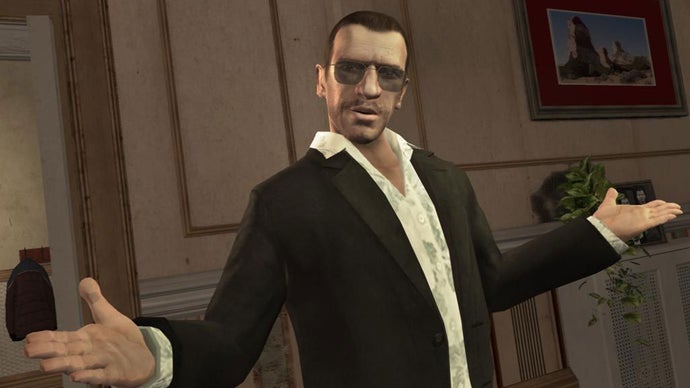
Grand Theft Auto IV finally received modern upscaling technology eighteen years after its 2008 release. A new mod adds DLSS, DLAA, and FSR support to the aging open-world crime game, letting PC players dramatically improve performance and visual quality on contemporary hardware.
The mod exploits a gap in Rockstar's recently updated modding guidelines. The publisher prohibited unauthorized story expansions, unofficial ports, and mods that combine existing GTA maps ahead of GTA 6's launch. Texture replacements, shader enhancements, and performance tweaks remain fair game. DLSS and FSR fall squarely into that permitted category.
GTA IV's age creates real technical friction on modern systems. The game shipped with aged rendering technology that produces jagged edges and struggles to maintain smooth framerates at high resolutions on current GPUs. Even high-end graphics cards can't push the game past 60 frames per second without significant compromises. DLSS (Deep Learning Super Sampling) from Nvidia and FSR (FidelityFX Super Resolution) from AMD use machine learning or algorithmic upscaling to render at lower internal resolutions then intelligently reconstruct higher-resolution output. This delivers sharper visuals and better performance simultaneously.
DLAA (Deep Learning Anti-Aliasing) handles jaggedness differently. Instead of upscaling, it applies AI-driven anti-aliasing directly to native resolution output, smoothing rough edges without the performance cost of traditional supersampling. For a game notorious for pixelated geometry even on release, this addresses a core visual complaint from the original PC port.
The mod's existence reflects broader modding trends. GTA IV never received official performance patches or visual enhancements from Rockstar. The company instead shifted resources to GTA Online and newer projects. Community developers stepped in to address what Rockstar abandoned. Similar mods exist for GTA V, though that game benefits from more frequent Rockstar support and isn't nearly as old.
This release matters for preservation and accessibility. GTA IV remains a landmark title in open-world design, narrative presentation, and cultural impact. Its 2008 PC version ran poorly even at launch. Emulation communities often struggle with the game's demanding architecture. Upscaling mods make the experience playable on modern rigs without sacrificing visual fidelity that dated technology initially couldn't deliver.
Rockstar's updated modding guidelines show the company navigating a difficult balance. Complete prohibition would crush the community that keeps older GTA titles alive. Overly permissive rules risk cannibalizing sales or undermining GTA 6's launch. Performance enhancements and visual upgrades apparently fit Rockstar's acceptable middle ground. The company tolerates cosmetic and technical improvements while cracking down on content that could compete with official releases.
For players, this means GTA IV enters a new era of playability. A sixteen-year-old game with legendary storytelling, voiced by Michael Holley, Niko Bellic, and a sprawling cast, becomes genuinely enjoyable on 2024 hardware. Performance reaches 100+ fps at high resolutions on mid-range GPUs. Visual quality approaches modern standards without requiring a complete remake.
The mod also signals community commitment to PC gaming. When publishers abandon aging titles, modders don't. This approach sustained hundreds of older games through technological transitions that would otherwise render them obsolete. GTA IV's continued relevance owes everything to these technical improvements and the people building them.