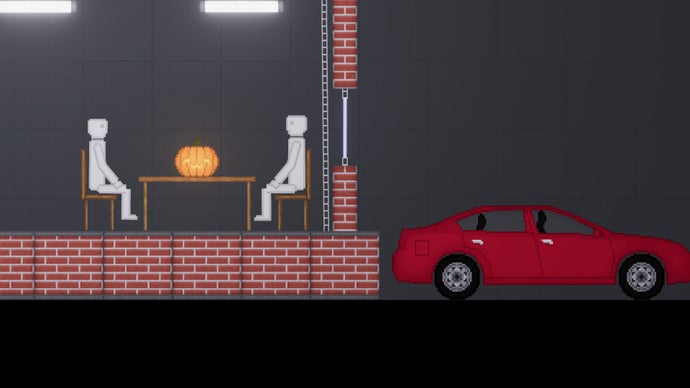
People Playground, a Steam sandbox title centered on physics-based ragdoll destruction, suffered its second malware attack through mods in 2024 after developer Mestiez disabled the game's Steam Workshop following the discovery of a malicious mod distributing malware.
The incident occurred on September 21st. Mestiez issued an urgent warning to players who accessed People Playground with mods enabled on that date, directing them to run immediate virus scans. The developer also advised the entire community to avoid launching the game until an all-clear announcement confirmed the threat had been neutralized.
This marks the second malware-through-mods incident for People Playground this year, exposing a persistent vulnerability in user-generated content ecosystems on Steam. The game's heavy reliance on modding, a core part of its sandbox appeal, has turned into a security liability. Players use mods to expand gameplay mechanics and create custom content within the ragdoll torture simulator, but that same openness creates vectors for bad actors to distribute malicious code.
People Playground's premise centers on a physics sandbox where players interact with ragdoll characters in often brutal or comedic ways. The game gained a cult following on Steam for its physics engine and creative freedom, attracting millions of players. However, that popularity also makes it a target for malware distribution. Attackers understand that active modding communities trust workshop content from fellow players, making social engineering easier than direct vector attacks.
The malware campaign exemplifies a broader problem affecting Steam Workshop across multiple titles. Valve's moderation systems, despite improvements, struggle to catch malicious uploads before they reach users. Workshop mods receive less scrutiny than published games themselves. Community-flagging systems depend on users recognizing suspicious behavior, which often happens too late.
Mestiez's response reflects industry-standard protocol for mod-based infections. Disabling Workshop entirely removes the attack surface while the developer investigates. However, this solution damages the game's ecosystem temporarily. For a title where modding constitutes a major value proposition, shutting down Workshop impacts active players and stalls content creation momentum.
This incident compounds existing trust issues with Steam Workshop security. Players already exercise caution downloading mods from unfamiliar creators or sources outside official channels. A second attack in one year erodes confidence further. Communities often migrate toward private Discord servers or alternative mod hosting sites when official platforms suffer breaches, fragmenting the user base.
The timing matters too. Mid-September attacks catch players during autumn gaming season when engagement peaks. Recovery requires not just technical fixes but public reassurance. Mestiez must rebuild confidence that the platform is safe before players resume modding activities. Failure to do so could drive the community toward competing sandbox games or alternative platforms entirely.
Developers of modding-heavy titles now face a choice. Strengthen Workshop moderation and implement additional security scanning, or risk repeated incidents that alienate the core audience. For People Playground specifically, this second attack demands comprehensive system overhauls, not just patch deployments. The malware's severity apparently warranted calling it "especially bad" by observers, suggesting this wasn't a routine trojan but something more aggressive or widespread in scope.
Until Mestiez delivers concrete security improvements and clarifies what exactly infected those mods, player trust remains fractured. The malware campaign succeeded in damaging not just system security but the social contract between developer and community that Workshop depends on.