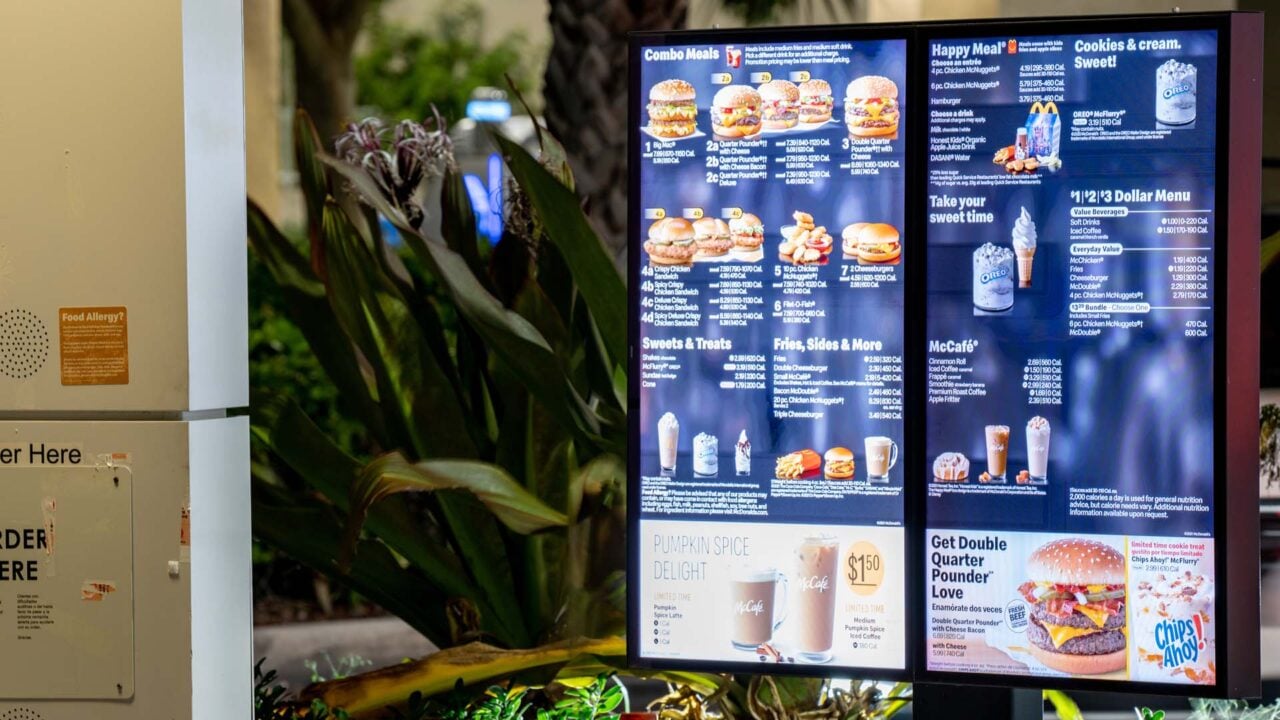
McDonald's has begun rolling out advertising displays in drive-thru lanes across the United States, showing promotional content from third-party brands while customers wait to order. The fast-food giant is monetizing the idle time between the menu board and the payment window, transforming a traditionally ad-free moment into a captive advertising space.
The screens display advertisements for products unrelated to McDonald's menu items. Customers sitting in stationary vehicles face a constant barrage of marketing messages, unable to avoid or ignore the content. The company views this as a revenue opportunity. Third-party brands see it as access to a highly engaged audience trapped in a confined space with limited distraction options.
This tactic represents an evolution in McDonald's broader strategy to generate revenue beyond food sales. The chain has already expanded its digital advertising network, working with brands like Coca-Cola and P&G to place ads in locations throughout restaurant interiors. The drive-thru expansion targets a demographic that McDonald's knows visits regularly and spends money consistently.
The move mirrors practices already embedded in other industries. Airports, gas stations, and elevators all weaponize captive audiences with screens and signage. Digital billboards on highways exploit drivers' inability to change channels. Movie theaters charge premium fees partly because audiences sit through pre-roll advertisements. McDonald's recognizes this template works and applies it to their physical infrastructure.
From a consumer perspective, the response has been mixed to negative. Players and commenters across social media platforms criticized the tactic as invasive and exhausting. The sentiment reflects broader frustration with advertising saturation. Americans encounter thousands of ads daily. Adding more in spaces previously untouched by marketing feels like another encroachment on daily life.
The timing matters. This rollout occurs as McDonald's faces pressure to boost profits and explore new revenue streams. Franchisee costs have risen. Labor expenses increased. Food commodity prices fluctuated. Advertising networks provide predictable income without inventory risk. Each ad placement generates revenue with minimal operational overhead.
Competing fast-food chains will likely observe this closely. If McDonald's succeeds in monetizing drive-thru wait times without significant customer backlash, Burger King, Wendy's, and Taco Bell will follow. The playbook works everywhere: identify captive audiences, install screens, sell ad space to the highest bidder.
The drive-thru ads also represent a data collection opportunity. McDonald's can track which advertisements generate engagement, linking ad exposure to purchase behavior. This information becomes valuable to both McDonald's and advertising partners seeking to understand customer response in real-world retail environments.
For now, the initiative remains in testing phases at select locations. McDonald's will measure customer response and advertiser interest before national expansion. If previous digital advertising ventures prove profitable, expect this rollout to accelerate throughout the system.