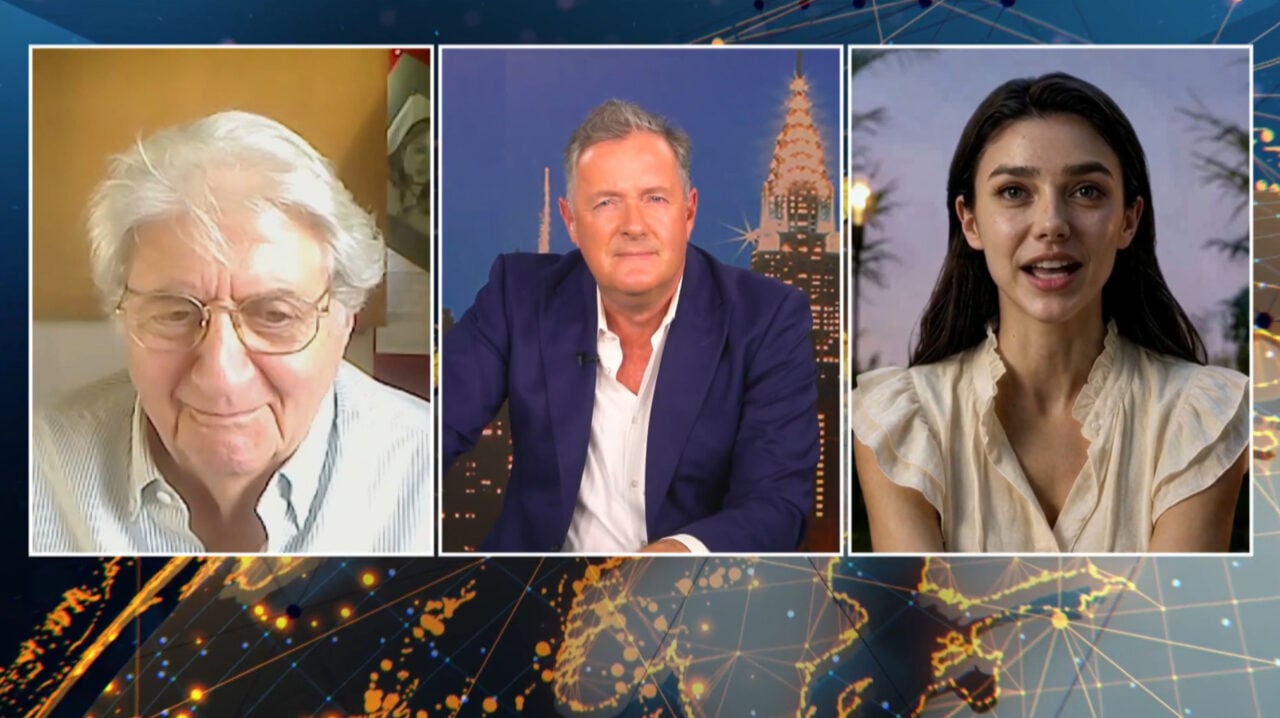
An AI-generated actress malfunctioned during a high-profile television interview, exposing the raw limitations of synthetic performers in real-time entertainment situations. During Friday's appearance on Piers Morgan's show to promote the AI movie "Misaligned," the digital character Tilly Norwood unexpectedly switched to Cantonese mid-conversation, leaving the veteran interviewer visibly confused and scrambling to redirect the interaction.
The glitch highlights a critical vulnerability in AI entertainment products entering mainstream media. Unlike pre-recorded content where errors can be edited out, live television exposes these systems to unpredictable failure states. Tilly Norwood, a fully synthetic performer, represents an emerging category of digital talent being deployed for publicity and performance work. The Cantonese outburst suggests either a training data contamination issue, a language model hallucination, or a complete system collapse during the interview setup.
Piers Morgan's reaction underscores how audiences still expect coherent, controlled behavior from on-screen personalities, even digital ones. When AI systems deviate from expected patterns, they trigger cognitive dissonance. Viewers recognize something fundamental has broken. This creates immediate credibility damage for both the technology and the film being promoted.
"Misaligned" appears to be a test case for using fully synthetic actors in narrative filmmaking. The industry has experimented with deepfakes and digital doubles for years, but deploying an AI character as the face of a theatrical release takes that concept further. It removes human actors from the marketing equation entirely, reducing labor costs and creative control friction. However, this interview disaster proves that approach carries significant risk when that AI talent hits unforgiving live environments.
The Cantonese incident reveals something deeper about large language models and neural networks. These systems don't truly understand context or language boundaries. They operate through statistical pattern matching across massive training datasets. When Tilly Norwood's underlying architecture encountered unfamiliar inputs or encountered a gap in its instruction tuning, the system reverted to patterns from its training data that included Cantonese language examples. Without proper guardrails, the system had no mechanism to recognize this output as inappropriate for an English-language interview.
Recovery from this kind of public malfunction typically requires swift damage control. The production team behind "Misaligned" now faces questions about whether Tilly Norwood can reliably perform in unscripted situations. They'll need to decide whether to beef up safety systems, restrict future interviews to pre-recorded formats, or shift promotional duties back to human actors. Each option carries costs.
This incident arrives as Hollywood grapples with whether AI talent represents efficiency or existential threat. For studios, synthetic performers promise unlimited takes, zero salary demands, and no scandals. For workers, they represent direct competition. This live malfunction might actually serve union interests by demonstrating that AI systems aren't ready to replace human performers in contexts requiring genuine improvisation and real-time problem solving.
The broader entertainment industry will watch how audiences react to future AI performers. Viewer trust erodes quickly after visible failures. Whether Tilly Norwood and projects like "Misaligned" can recover depends on whether the technology can be sufficiently refined, or whether audiences will simply reject synthetic talent that glitches on live television.