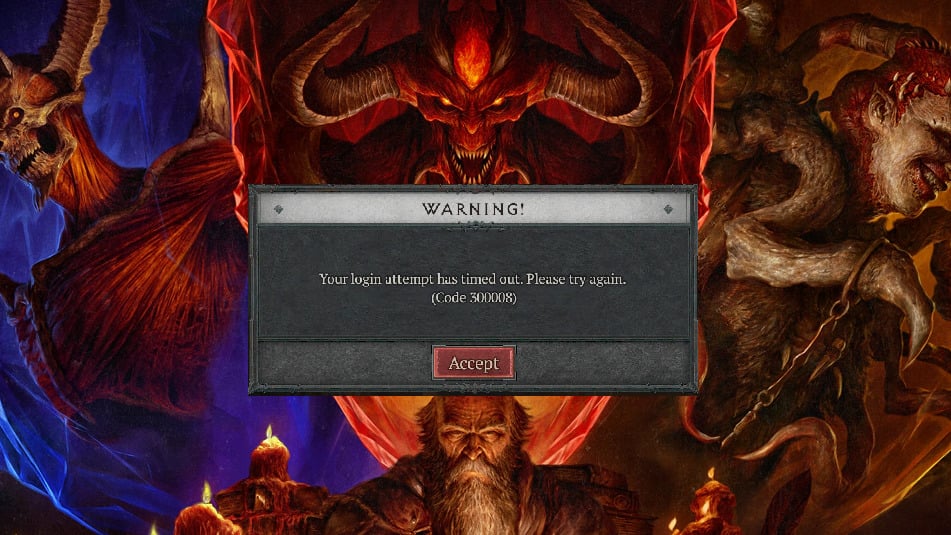
Blizzard pushed back the launch window for Diablo 4's Season 15, titled Season of Hell's Legacy, after players encountered widespread error codes during the initial rollout. The delay affects one of the year's marquee content drops tied to Diablo's 30th anniversary celebration.
The season launched into chaos. Players flooded forums and social media with reports of connection failures, server errors, and login problems that prevented access to the new content. Blizzard's servers buckled under the load, a familiar pattern for major MMO and live-service game launches that draws thousands of concurrent players within hours.
Season of Hell's Legacy represents a significant milestone celebration. Diablo 4, released in June 2023 by Blizzard Entertainment, reaches deeper into its post-launch roadmap with seasonal content that ties directly to the franchise's three-decade legacy. The season introduces new mechanics, cosmetics, and endgame activities designed to retain and re-engage the playerbase heading into late 2024. Anniversary seasons typically drive return players and streamers back into live-service titles, making launch stability critical to momentum.
The technical failures came at an inopportune moment. Diablo 4 faces ongoing competition from Path of Exile 2 and other action RPGs gunning for market share in the genre. Player trust erodes quickly when servers fail during major content launches. Veteran Diablo fans, who remember the catastrophic Diablo 3 launch in 2012, watched the repeat scenario with frustration.
Blizzard stated it would roll out the season on a staggered schedule to manage server load more effectively. The studio implemented additional infrastructure checks and deployed patches to address the error cascade. This approach mirrors fixes Blizzard used for Overwatch 2's launch and World of Warcraft's expansion releases when server capacity issues forced similar mitigation strategies.
The delay exposed underlying infrastructure concerns for Diablo 4. Despite more than a year of post-launch operations, the game's netcode still struggles with peak concurrency moments. Players expect better stability from Blizzard, a studio with decades of live-service experience running World of Warcraft and Diablo 3 at scale.
Recovery hinges on execution. Blizzard needs the rescheduled launch to run cleanly. A second failure cascades into damage control that extends beyond a single season launch. For a live-service game competing for attention and subscription value, seasonal content launches define player retention cycles. Miss the window, and players drift toward competing titles.
The 30th anniversary framing adds weight to the botched launch. Diablo 4 developers positioned Season of Hell's Legacy as a celebration of the franchise's legacy and a turning point for the game's current season structure. Instead, players associate the milestone with server instability and access failures.
Blizzard faces a narrow redemption window. When Season of Hell's Legacy goes live on the adjusted schedule, stability must hold. If servers remain fragile, the damage to Diablo 4's reputation intensifies. The franchise built its legacy on delivering polished, playable experiences at launch. This delay signals that reputation needs rebuilding.