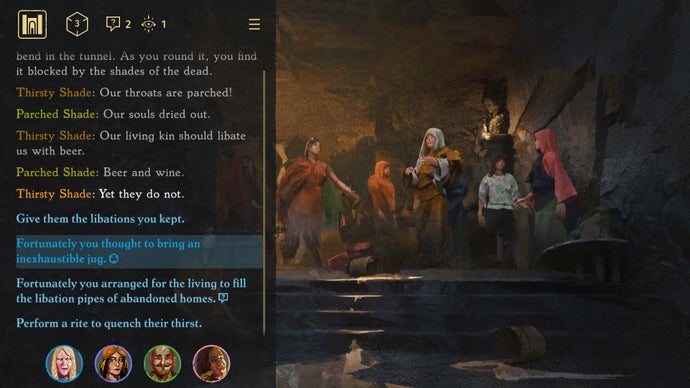
Thousand Hells: The Underworld Heists delivers joyful chaos wrapped in infernal trappings. This choose-your-own-adventure RPG anthology comes from the design minds behind King of Dragon Pass, the cult classic from 1999 that proved narrative-driven strategy games could thrive without combat-focused mechanics.
The game frames itself as a series of Orphic descents, meaning repeated journeys into the underworld with escalating stakes. You assemble a crew of four characters described as garrulous weirdos, then throw them at quest scenarios brimming with dark humor and absurdist obstacles. Talking trees demand philosophy. Holy riddlers block your path with unanswerable questions. Conduits of boiling blood threaten your passage. Each scenario branches based on your choices, creating distinct story threads and outcomes.
What sets Thousand Hells apart is tone. A game with "hell" in the title could easily wallow in grimdark aesthetics and nihilism. Instead, the anthology radiates infectious lightness and venturesome spirit. The writing leans into wit over despair. Your crew banter and clash. Scenarios reward creative thinking over optimal min-maxing. This tonal balance, maintaining levity while exploring underworld mythology, marks a deliberate design choice that separates it from grim-faced alternatives.
The King of Dragon Pass pedigree matters here. That 1999 game established a template where emergent narrative, procedural storytelling, and player agency created engagement without relying on reflexive combat systems. The designers understand how to build compelling decision trees where outcomes feel earned rather than predetermined. Thousand Hells applies that expertise to a hell-themed heist anthology structure, replacing Dragon Pass' clan management with crew assembly and underworld infiltration.
The anthology format allows episodic variety. Each heist can explore different mythological angles, monster types, and moral dilemmas. One scenario might involve negotiating with demonic entities. Another could center on transporting ghostly passengers across rivers of the dead. A third might pit your crew against bureaucratic obstacles in some infernal administration office. This variety prevents tonal repetition and keeps the core loop fresh across multiple runs.
For players, Thousand Hells targets the demographic that loved Dragon Pass, Disco Elysium's dialogue-heavy investigation systems, and Inscryption's narrative-meets-mechanics blending. It appeals to those fatigued by combat-focused gameplay loops who crave character-driven emergent storytelling. The game rewards multiple playthroughs, as different crew compositions and choices generate wildly different narratives and outcomes.
The indie market increasingly validates this approach. As AAA studios chase cinematic spectacle through expensive motion capture and Hollywood voice talent, smaller studios explore intimate narrative design. Thousand Hells positions itself in that space, betting that players will engage deeply with a game built around conversation, choice consequence, and creative problem-solving rather than mechanical mastery or twitch reflexes.
The infectious quality the developers emphasize suggests they've nailed the central challenge of underworld-themed comedy: maintaining stakes while embracing absurdity. Your crew might face genuine danger, but the game never loses its sense of fun. That balance between peril and levity, between mythological weight and comedic surprise, creates memorable moments that stick with players long after a single playthrough concludes.