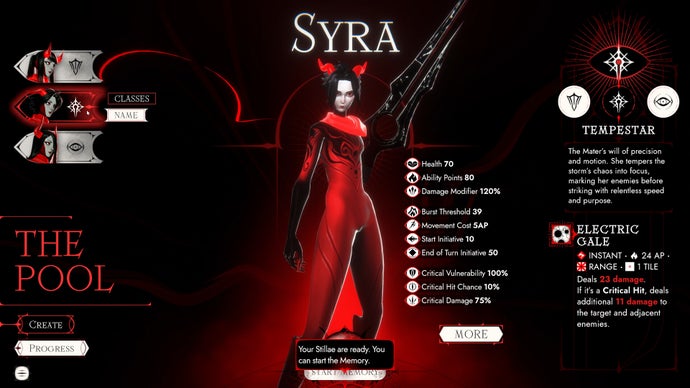
Ex Sanguis combines the timeline-manipulation mechanics that defined Othercide with a leaner roguelike structure, creating a fresh take on tactical strategy games. Developer Lightbulb Crew has built a stylized XCOM-like where controlling initiative and timing matters more than traditional spatial dominance.
The game's core loop centers on managing temporal advantage in turn-based combat. Where most tactics games emphasize positioning and resource attrition, Ex Sanguis makes the turn order itself a strategic resource. Players command biomechanical units, described as "willowy clone women made out of congealed blood and pincers," whose turn sequencing and ability timing create the primary decision layer. This represents a deliberate design pivot from Othercide, which Lightbulb Crew's previous title explored timeline manipulation as a narrative and mechanical concept across a longer campaign structure.
The roguelike framework changes how players engage with that core system. Rather than a single lengthy playthrough with persistent narrative consequences, Ex Sanguis spreads its strategy across multiple shorter runs. Each campaign reset introduces new unit combinations, enemy encounters, and tactical scenarios. This structure rewards mastery of timing principles while keeping individual sessions contained. Players learn to recognize when seizing initiative beats conventional offensive buildup or defensive formations.
The visual presentation matches the mechanical philosophy. The game opts for stylization over realism, with a distinct art direction that emphasizes the alien nature of its combatants. This aesthetic choice supports the roguelike pacing. Faster visual clarity helps players make rapid decisions across multiple runs without fatigue from dense environmental detail.
Ex Sanguis targets players fatigued by conventional tactics games that reduce strategy to map control and unit positioning. XCOM-likes have dominated the turn-based tactics space for over a decade, but Ex Sanguis identifies a gap. The genre typically treats initiative as a secondary concern, something determined by character stats or random rolls rather than player mastery. By elevating turn order into the primary strategic axis, the game creates tactical depth through a different lens.
Othercide established Lightbulb Crew's willingness to experiment with unconventional mechanics in the tactics space. That game struggled with some design elements but showed clear intention. Ex Sanguis refines that approach. The roguelike structure provides a playground for iterating on timeline mechanics without demanding a 40-hour narrative commitment from players.
The comparison to Othercide matters because it signals the studio's confidence in doubling down on unconventional design rather than chasing XCOM's proven formula directly. Many tactical games released since 2020 have essentially remixed XCOM's structures. Ex Sanguis instead asks whether player agency through turn manipulation could replace spatial mastery as the central strategic concern.
This approach appeals to a specific player psychology. Strategy game veterans recognize that controlling information and momentum often determines victory before units clash. Ex Sanguis makes that principle mechanical and observable. Every decision ripples through the turn order. Unit abilities that sacrifice positioning for initiative gain become genuinely valuable.
The roguelike framework also addresses a common criticism of tactics games: repetitive campaign structures. By implementing permanent death runs with changing conditions, Ex Sanguis keeps its core system fresh across dozens of hours. Players who master initiative control can tackle escalating difficulty modifiers rather than retreading familiar story beats.
Ex Sanguis launches into a crowded tactics market, but it enters through a different door than competitors. The game trades epic narratives and large-scale warfare for moment-to-moment timing mastery and rapid campaign cycles. For players seeking tactical depth beyond typical XCOM clones, that distinction matters considerably.