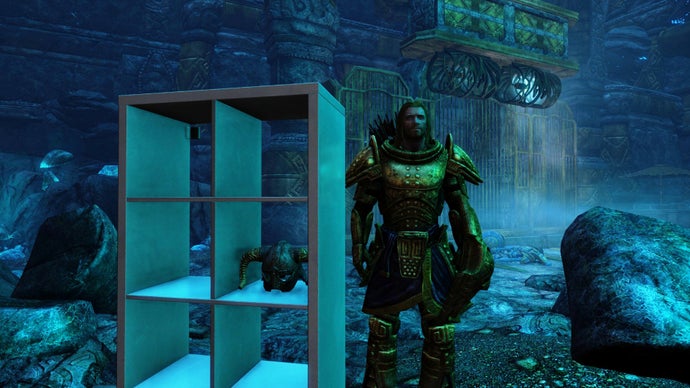
IKEA has partnered with Bethesda Game Studios to release an official Skyrim mod, and the furniture retailer's first foray into video game advertising works because it leans into satire rather than hard selling. The mod introduces IKEA-branded furniture and design into The Elder Scrolls V: Skyrim, complete with its own dungeon space filled with the Swedish company's signature flat-pack aesthetic. What could have been a crass product placement instead becomes a playable joke that respects the game's existing tone.
The collaboration marks a rare moment where branded content integrates smoothly into a game community. IKEA commissioned modders to build the creation, and Bethesda approved it for the official Creation Club platform, where players access paid cosmetic and gameplay content. The mod doesn't interrupt your adventure or force you to interact with ads. Instead, it adds a self-aware location that fans of both Skyrim and IKEA's quirky design philosophy can enjoy without feeling manipulated.
The dungeon designs themselves reportedly hold up as genuine Skyrim content. Rather than slapping the IKEA logo everywhere, the modders translated the company's minimalist, modular furniture approach into something that fits Elder Scrolls dungeon architecture. That effort transformed what should have been a hollow advertisement into entertainment. Players encounter functional spaces organized with IKEA's logic, creating an environment that works as both parody and playable level design.
This approach differs sharply from how most corporations dabble in gaming. Typical brand crossovers feel extractive, forcing players to acknowledge a product that has nothing to do with the game's world. They interrupt immersion and demand attention. IKEA's Skyrim mod instead uses the game's existing language of exploration and discovery to present its products. You're not watching a commercial. You're exploring a dungeon that happens to be furnished by IKEA.
The reception among Skyrim's players reflects this balance. The community recognizes the joke without feeling insulted. This success establishes a template other companies might follow, though few likely will. Most corporate entities lack the confidence to make their brand the punchline. They want straight product placement, sponsorship logos, and guaranteed eyeballs. IKEA gambled that humor and craft would resonate with gamers better than traditional advertising, and that bet appears to have paid off.
Skyrim's modding ecosystem provided ideal infrastructure for this experiment. The game's community of creators has spent over a decade building everything from visual overhauls to total conversion mods. IKEA's official creation exists within that tradition, proving that brands can commission quality content when they hire actual modders rather than trying to build it in-house. The mod feels native to Skyrim because it was built by people who understand the game's conventions.
The timing matters too. Skyrim launched in 2011 and shows no signs of slowing down. Bethesda's strategy of continued content support through Creation Club keeps players invested and gives new venues for both official content and community creations. IKEA recognized an active, welcoming audience in a game that endures across multiple generations of hardware.
Whether this opens doors for other brands remains uncertain. Most won't have IKEA's design philosophy or irreverent sensibility. The furniture retailer's minimalism and assembly-required aesthetic lend themselves naturally to Skyrim's modular dungeon design. A luxury car company or smartphone manufacturer would struggle to find the same angle. Still, IKEA demonstrated that games offer untapped potential for brands willing to respect the medium and let creators lead.