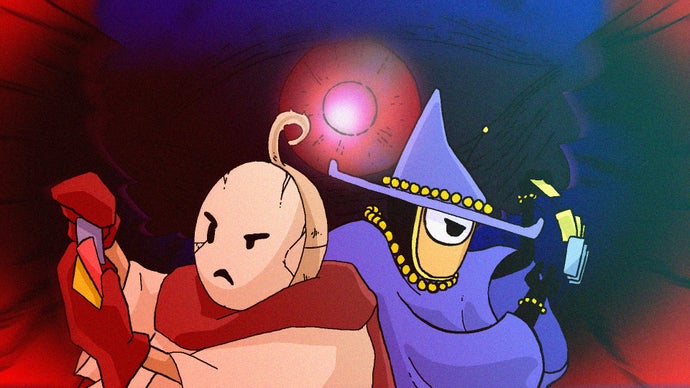
Stack Order, a new roguelike deckbuilder from an indie studio, introduces a unique twist on the genre. Instead of playing cards in traditional sequences, players stack cards on top of each other to trigger layered effects and maximise their power. The mechanic transforms standard deck management into a spatial puzzle where card placement order determines outcome.
The game's visual presentation immediately stands out. Stack Order commits fully to a graphic novel aesthetic that actually delivers on its promise. The art direction reads authentically as if pulled from a European comic book, with chunky, textured linework and a distinctive visual language. Unlike many games that claim graphic novel styling only to feel generically stylized, Stack Order nails the execution. The panels, colors, and character designs all reinforce the comic book DNA throughout.
As a roguelike deckbuilder, Stack Order inherits the genre's core appeal. Players build their deck run by run, making strategic choices about which cards to add after each victory. However, the stacking mechanic fundamentally differentiates it from direct competitors like Slay the Spire. Rather than simply activating cards in order, players must physically layer them, creating combinations where card position unlocks synergies. A card at the bottom of a stack might apply a modifier to all cards above it. Another card might gain power based on what cards sit atop it. This creates a three-dimensional deckbuilding puzzle.
The roguelike structure means runs vary significantly. Each playthrough presents different card pools, enemy encounters, and build opportunities. Players chase specific synergies, pivot strategies mid-run, and adapt to what the RNG gods provide. The stack-based mechanics add genuine replayability since the same cards play entirely differently depending on how you arrange them.
The story wraps around this core mechanic, giving narrative context to the stacking system rather than treating it as pure abstraction. This grounding helps the concept feel organic rather than gimmicky.
From a market perspective, Stack Order enters a crowded indie roguelike space where Slay the Spire dominates mindshare. Success requires differentiation, and the stacking mechanic provides exactly that. Players fatigued by traditional deckbuilder patterns will find fresh strategic depth here. The visual presentation further elevates it above competition. Indie developers have proven audiences will pay for polished, innovative takes on proven formulas, and Stack Order delivers on both fronts.
The game targets PC initially, capitalizing on the platform's strength for strategic, turn-based experiences. The indie deckbuilder market remains healthy, with players constantly seeking new takes on Slay the Spire's successful formula. Stack Order's combination of mechanical innovation and authentic artistic vision positions it as a genuine alternative rather than a derivative clone.