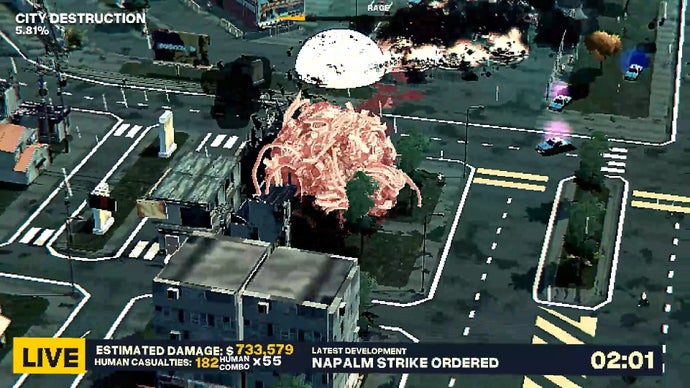
ROLLA arrives this month as a carnivorous twist on the Katamari Damacy formula. Instead of rolling up innocent objects into increasingly absurd balls, players control a grotesque mass of flesh that destroys everything in its path. The game embraces body horror and B-movie aesthetics where Katamari embraced whimsy.
The core mechanic mirrors Katamari's addictive loop. Roll around the environment. Consume objects. Grow larger. The difference lies in tone and consequence. ROLLA's fleshy protagonist leaves destruction and chaos in its wake, transforming the cheerful collection gameplay into something deliberately transgressive. Where Katamari asks "what can we fit on this ball," ROLLA asks "what can this abomination devour."
This shift reflects growing developer interest in subverting established arcade formulas. Games like Dread Hunger and Carrion have proven player appetite for horror-twisted takes on familiar mechanics. ROLLA positions itself in that lineage, using the recognizable Katamari structure as a vehicle for darker comedy and grotesque spectacle.
The B-movie presentation compounds the appeal. Low-budget horror cinema's embrace of practical effects, creature design, and ridiculous premises aligns perfectly with ROLLA's visual identity. The fleshy, organic aesthetic contrasts sharply with Katamari's colorful minimalism. Players won't mistake one for the other despite mechanical similarities.
Timing matters here. Katamari Damacy remains a beloved cult classic nearly two decades after its 2004 debut, with multiple sequels and a 2023 remaster on modern platforms keeping the series visible. That cultural foothold creates both opportunity and risk for ROLLA. Fans know the core formula works. Subverting it appeals to players seeking fresh takes on proven mechanics. However, the comparison invites scrutiny. ROLLA must justify its existence beyond novelty.
The indie development landscape has matured enough to support these kinds of specialized projects. ROLLA targets players fatigued by traditional puzzle-platformer design and horror games alike. By combining both, it claims territory no major publisher would greenlight. That creative freedom defines modern indie success.
Release this month positions ROLLA against a crowded calendar, but the game's distinctive visual identity and mechanical twist should help it stand out. The developer clearly understands what makes Katamari work mechanically while deliberately rejecting its aesthetic and emotional tone. That's harder than simply cloning the formula.
The reception will reveal whether players want evil Katamari, or whether the original's charm proves irreplaceable. Either way, ROLLA represents exactly the kind of experimental design that keeps the gaming medium interesting. It takes a known quantity, inverts its moral axis, and asks what emerges from that simple inversion.