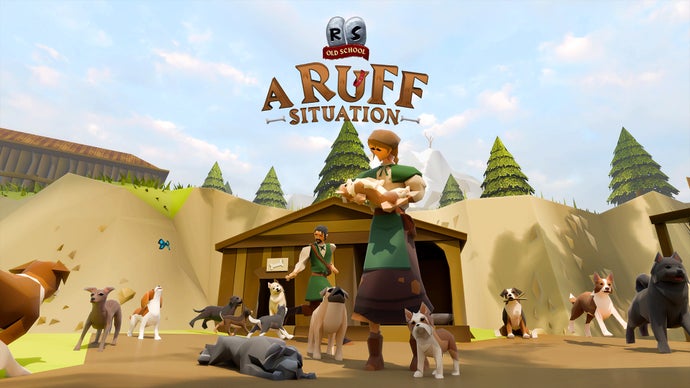
Old School RuneScape players have long demanded one feature above all others. Dogs. Low-poly dogs. Jagex delivers exactly that with a new members-only quest that grants players their very own puppy companion in the beloved 2007-era MMO.
The addition marks another content expansion for OSRS, which continues to thrive as one of gaming's most resilient live service titles. The quest-based dog acquisition system fits the game's design philosophy perfectly. Rather than handing pets to players outright, Jagex wraps the feature inside narrative and gameplay, maintaining the grind-oriented progression system that defines the experience for its 200,000+ average concurrent players.
The low-poly aesthetic matters here. Old School RuneScape exists specifically because Jagex reverted RuneScape to its 2007 version in 2013, responding to players who despised the modernized RuneScape 3. OSRS builds everything around that chunky, polygon-light visual identity. A shiba inu rendered in that style carries genuine charm precisely because it conflicts with contemporary expectations. The dissonance between cute dog and retro blocky graphics becomes the appeal itself.
This aligns with how OSRS has evolved since its surprise 2013 launch. The game was supposed to be a niche throwback. Instead, it captured the zeitgeist of nostalgia-driven gaming and never let go. Jagex has spent over a decade adding content that respects the 2007 ruleset while expanding it cautiously. The community votes on major updates through in-game polls. Pets arrived years ago, but dogs specifically faced repeated community requests. Jagex resisted for years, then finally capitulated to the demand.
The quest structure suggests Jagex integrated dogs thoughtfully rather than simply dropping them as cosmetics. Players will need to complete content to unlock their companion. This approach prevents inflation while rewarding engagement. It mirrors how OSRS handles other desirable items and cosmetics. The membership requirement gates the feature behind OSRS's subscription model, ensuring only players invested in the full experience access it.
Context matters for understanding OSRS's continued relevance. RuneScape 3 remains active, but OSRS dominates player counts and revenue. The 2013 revival became the flagship version by accident and design. Jagex learned that players valued mechanical depth and grind over graphical fidelity. OSRS proved this thesis repeatedly. Every major update brings thousands of returning players and converts from RS3. The game generates hundreds of millions annually for Jagex's parent company Embracer Group.
Adding dogs took this long because Jagex operates cautiously with OSRS. The community shapes updates through voting. Players rejected dog additions before. That players eventually demanded them shows how OSRS creates genuine investment. These aren't cosmetics imposed from above. They're features players wanted badly enough to campaign for.
The low-poly shiba specifically carries layers of meaning. Shiba inu memes dominated internet culture for years. The Doge meme defined early 2010s online culture. Seeing that breed rendered in OSRS's deliberately retro graphics creates temporal weirdness. Modern meme culture meets 2007-era MMO design. That collision is precisely what keeps OSRS players engaged. The game becomes a bizarre museum where modern requests meet ancient technology.
For Jagex, dogs represent another successful community-driven update. OSRS thrives on this cycle. Players request features. Community votes determine additions. Jagex executes thoughtfully. New content arrives that respects OSRS's identity while satisfying demand. Dogs continue that pattern. Low-poly shiba inu or not, the update reinforces why OSRS remains gaming's most unusual success story.