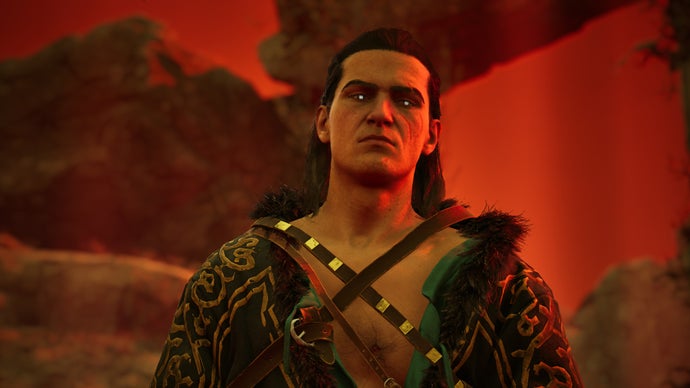
# Blood of Dawnwalker Stumbles on Its Own Power Fantasy
Vampire fiction struggles with a fundamental tension. Authors want players to feel the weight of immortality, the burden of endless hunger, the isolation of outliving every human connection. Yet they also dangle superpowers, eternal youth, and gothic excess that makes the whole curse feel like a pretty solid deal. Blood of Dawnwalker, the upcoming action-RPG from Demiurge Studios, trips over this exact problem.
The game positions itself as a vampire power fantasy. You transform into wolves, seduce mortals in twisted gothic scenarios, enjoy the physique benefits of living on blood alone, and experience centuries of existence that mere humans cannot fathom. The writing leans hard on the "immortality is actually a burden" angle, the tired refrain that echoes through decades of vampire fiction. Don't stay up late, the exhausted bloodsuckers tell us, as if infinite nights of superhuman strength and regeneration sound boring rather than transcendent.
Here's the disconnect that Blood of Dawnwalker fails to resolve. If vampirism genuinely feels like a curse, the game should make you feel it. Instead, the current design celebrates the fantasy. You get the abs, the shapeshifting, the longevity, the social dominance. The supposed emotional cost, the loss, the desperation of eternal hunger... these elements fade into background flavor text while you enjoy mechanics that feel fundamentally empowering.
What Blood of Dawnwalker actually needs, based on this criticism, is a harder turn toward systemic survival. Imagine a vampire sim where hunger becomes a constant resource pressure, where moral choices carry genuine weight because you must hunt and feed to survive. Not as a power trip, but as a desperate calculation. Every feed matters. Every human connection represents potential nourishment or threat. The gothic atmosphere stops being window dressing and becomes the actual mechanical foundation.
Games like Vampire: The Masquerade Bloodlines worked partly because they grounded the vampire experience in social systems and resource scarcity. You weren't just collecting superpowers. You navigated factions, managed hunger, and faced genuine constraints on your freedom. That systemic desperation made the fantasy feel earned rather than handed over.
The vampire game market has space for both directions. Dontnod Entertainment's Vampyr explored murder and feeding morality within an action framework. The upcoming Bloodhunt from Sharkmob offers multiplayer vampire combat. But Blood of Dawnwalker seems caught between celebrating vampire excess and mourning its fictional costs, without fully committing to either.
Demiurge Studios faces a design choice. Double down on the power fantasy and own it, or rebuild the systems to make that power feel genuinely earned through survival, sacrifice, and systemic pressure. Half measures result in the current conflict where immortality sounds terrible while the gameplay screams it's actually fantastic. Players aren't fooled by the disconnect. They sense when a game says one thing while its mechanics celebrate another.
Blood of Dawnwalker launches into a crowded vampire action-RPG space. Its success depends on resolving this tension with clarity and conviction, not muddled messaging that asks players to feel despair while dangling unlimited power.