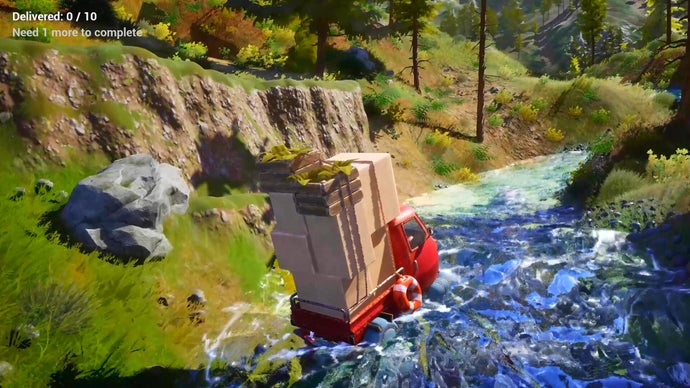
Pinetrail takes Death Stranding's delivery loop and strips away the apocalypse. The result. A zen logistics game where players pilot a tiny three-wheel rickshaw truck across forested mountains, hauling packages from point A to point B while managing cargo weight, truck physics, and the occasional thieving boar.
The game launches into a space Hideo Kojima proved viable with Death Stranding. Delivery mechanics carry genuine gameplay depth. Packing decisions matter. Route planning matters. Weight distribution affects how your vehicle handles downhill stretches and mountain passes. Pinetrail takes this formula and applies it to a serene setting rather than a post-apocalyptic wasteland littered with corpses and BTs.
Death Stranding became a cult phenomenon despite mixed critical reception on its story and pacing. The delivery system itself won players over. The tension of managing Norman Reedus' stamina, balancing cargo weight, and timing your movements created emergent puzzle-solving moments. The game proved audiences would engage with logistics simulators if the systems felt weighty and consequential. Kojima's vision influenced an entire wave of delivery-focused indie titles.
Pinetrail positions itself as Death Stranding's antithesis in tone while maintaining its mechanical DNA. Where Kojima's game wrapped delivery in existential dread and connectivity themes, Pinetrail embraces tranquility. The lush forest environments and casual art style signal a game designed to relax rather than unsettle. The mountain scenery suggests traversal challenges rooted in geography and weather rather than supernatural threats.
The boar mechanic injects personality into what could feel like a pure logistics simulator. These aren't enemies in the combat sense. They're obstacles with their own agendas. Thieving boars create dynamic encounters during deliveries. You plan around them. You navigate to avoid them. They become part of the environmental puzzle instead of hostile forces. This design philosophy mirrors Death Stranding's approach to challenge through obstacle placement rather than confrontation.
The three-wheel rickshaw truck sets specific physical constraints. Smaller vehicles demand different load management strategies than Death Stranding's bipedal porter. Narrower mountain paths and tighter turns create navigation demands. The humble rickshaw becomes the game's central character, its limitations forcing creative solutions.
Pinetrail emerges during an indie resurgence in logistics and management games. Titles like A Space for the Unbound, Unpacking, and Dave the Diver proved players embrace low-stakes gameplay loops rooted in careful planning and environmental storytelling. Pinetrail slots into this space naturally. It doesn't demand reflexes or combat skill. It demands patience and spatial reasoning.
The game targets players fatigued by action-dominated gaming. After years of high-stakes multiplayer shooters and souls-like difficulty spikes, audiences increasingly seek games that treat challenge as puzzle rather than threat. Pinetrail's calm aesthetic combined with meaningful delivery logistics addresses this appetite directly.
The title launches on PC, tapping into a platform known for indie-friendly audiences and players who gravitated toward Death Stranding's contemplative design philosophy. Console versions remain unconfirmed, though the rickshaw's cozy vibe suggests strong potential for Nintendo Switch ports down the line.