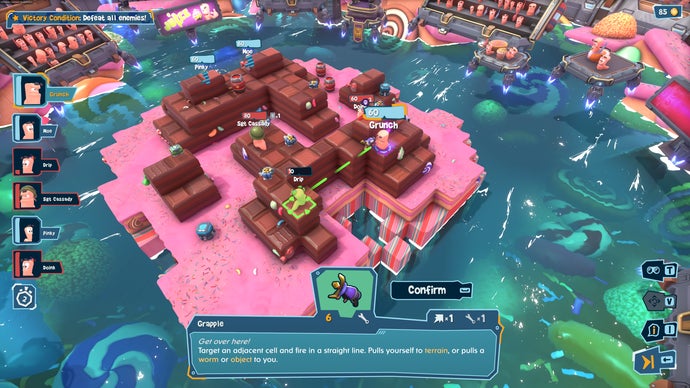
Team17 and Snap Finger Click's Worms: Galactic Tactics joins a crowded turn-based tactics market scheduled for 2027, but early hands-on sessions suggest the franchise brings more than surface-level XCOM mimicry to the space.
The turn-based grid battler translates Worms' signature chaos into a structured tactical framework. The series' destructible environments, physics-based weaponry, and dark humor remain intact, but channeled through deliberate positioning and planning rather than real-time artillery dueling. Early gameplay reveals a roster of customizable worm squads equipped with genre-standard abilities like movement, attacks, and cover mechanics. The critical difference lies in execution. Where XCOM clones often feel sterile or derivative, Worms: Galactic Tactics weaponizes environmental destruction and unpredictable physics as core strategic elements rather than window dressing.
The market context matters. Star Wars: Tactics, Rainbow Six Tactics, and the Warhammer 40K slate (including Battlesector and others) demonstrate mainstream appetite for tactical gameplay tied to established IP. Each offers distinct identity through licensed mechanics. XCOM's 2012 reboot and 2014 sequel created the template. Countless studios now chase that formula's commercial success and critical legitimacy. The saturation benefits players spoiled for choice but punishes mediocre entries.
Worms: Galactic Tactics differentiates by leaning into what made the franchise successful for three decades. The series thrived on comedy, mishap, and user-generated chaos. Campaign levels and multiplayer matches reward creativity and punish rigid tactics. Physics interact with map geometry in ways players never fully predict. A poorly-placed grenade doesn't just miss. It ricochets, triggers environmental collapse, or sends a worm careening into water. This systems-level unpredictability, paired with deliberate squad composition and positioning, creates moments that feel earned rather than scripted.
Early preview coverage highlights tight turn structure and meaningful choice. Players command limited action points per turn, forcing prioritization between movement, offensive abilities, and defensive positioning. The grid system maintains spatial clarity while destructible terrain constantly shifts the battlefield. Dynamic cover emerges and disappears as structures crumble. This forces ongoing adaptation rather than letting players lock into a single dominant strategy.
The 2027 release window positions Worms: Galactic Tactics for post-launch titles from competitors. Star Wars: Tactics launches 2025. Rainbow Six Tactics arrived earlier in development cycles. The delay grants Team17 room to refine mechanics and differentiate features. Early sessions suggest the studio understands that pasting Worms characters onto a generic tactics engine fails instantly. The franchise's identity must inform systems design, not merely cosmetics.
Whether Worms: Galactic Tactics succeeds depends on execution at scale. A few polished hours differ vastly from a 30-40 hour campaign. Multiplayer balance requires extensive testing. Long-term content roadmaps determine retention. The early signals prove encouraging. The mishaps that made Worms legendary needn't disappear in turn-based format. Instead, they become the engine of both humor and depth. In a market flooded with XCOM alternatives, that matters.