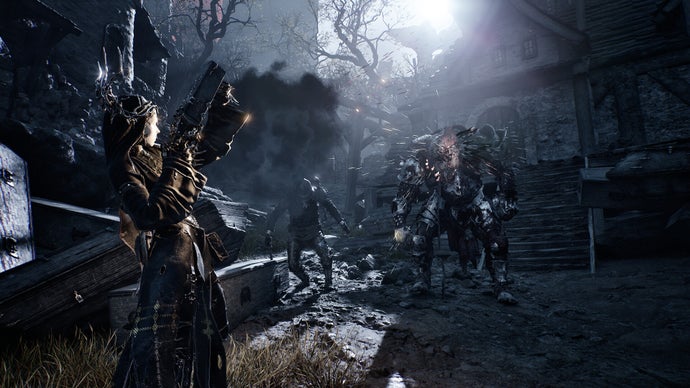
Cold Shell 2 developer Cold Symmetry rolled out its latest update with an experimental adaptive difficulty system that automatically scales challenge based on player performance. The feature monitors death frequency and adjusts enemy aggression, damage output, and encounter complexity in real time, creating a dynamic experience that tightens when players excel and loosens when they struggle.
This marks the studio's second major content push since Mortal Shell 2's early access launch. The first update, released a week prior, addressed player feedback by introducing additional beacons, new consumable items, and fixing riposte damage scaling. Cold Symmetry has maintained a steady cadence of balance tweaks and quality-of-life improvements to refine what remains a punishing souls-like experience.
The adaptive difficulty system represents a deliberate shift in philosophy for the genre. Traditional souls-likes, including the original Mortal Shell, demand precision and punish failure uniformly. By introducing dynamic scaling, Cold Symmetry acknowledges a growing audience segment that values challenge customization without sacrificing the core mechanical loop. The experimental tag suggests the studio remains cautious about its implementation, likely gathering telemetry data on how players respond before making permanent changes.
Mortal Shell 2 launched in early access on PC via Steam in February 2024, following a five-year development cycle. The original Mortal Shell, released in 2021, carved out a niche as a streamlined alternative to FromSoftware's ecosystem. The sequel expands on that foundation with new shells (playable characters), expanded combat depth, and an interconnected world structure. Early player reception praised combat responsiveness and artistic direction while criticizing harsh difficulty spikes and limited accessibility options.
The adaptive system directly addresses those accessibility complaints without trivializing encounters. Players who consistently wipe on specific bosses experience reduced incoming damage or slower enemy telegraphs. Conversely, players who maintain high win rates face tougher enemy variants and tighter attack windows. This dynamic approach mirrors systems popularized by games like Hades and Control, which blend accessibility with player agency.
The update's timing carries strategic weight. Early access titles depend on player retention metrics to justify continued investment. By implementing features that broaden appeal beyond hardcore souls-like veterans, Cold Symmetry signals commitment to reaching mainstream audiences. The experimental label provides an off-ramp if data suggests the feature fragments the community or dilutes the intended experience.
Beyond adaptive difficulty, the update addresses combat balance and quality-of-life concerns identified by the early access community. Specific enemy abilities received tweaks, animation responsiveness improved, and UI clarity enhancements streamlined information display. Cold Symmetry's iterative approach mirrors successful early access models like Baldur's Gate 3 and Helldivers 2, where transparent communication and rapid iteration build player goodwill.
The broader industry context matters here. Souls-like games have proliferated since Dark Souls legitimized the template in 2011. Elden Ring's 2022 release sparked mainstream discourse about difficulty and accessibility. Director Hidetaka Miyazaki's public stance on difficulty settings remained firm, but subsequent FromSoftware releases like Armored Core 6 offered greater customization. Cold Symmetry's adaptive system stakes middle ground: preserving challenge integrity while respecting varied player skill levels.
Mortal Shell 2 remains in early access with no confirmed full launch date. The experimental adaptive difficulty will likely inform the game's final design. If reception proves positive, the feature becomes a differentiator in a crowded souls-like landscape. If players reject it, Cold Symmetry can revert or refine before 1.0 release.