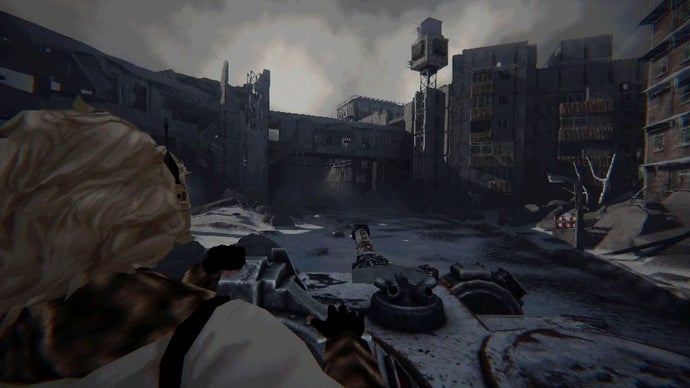
Wrong Organ, the studio behind the claustrophobic sci-fi thriller Mouthwashing, is pivoting hard into co-op chaos with Carcass Clad. The upcoming three-player tank horror game ditches the isolation and psychological tension of their debut for something far more demanding: shared responsibility, distributed panic, and the constant friction of keeping three players coordinated under fire.
Carcass Clad plants its scenario in a post-apocalyptic Soviet city, stripped of human inhabitants but crawling with grotesque enemy tanks. The setting alone signals Wrong Organ's commitment to an unsettling aesthetic. These aren't sleek military vehicles. They're mobile nightmares, their hulls wrapped in stitched-together cattle corpses in a grotesque nod to Frankenstein's monster. It's gruesome and deliberate, establishing a tone that mixes cosmic horror with the mechanical brutality of tank warfare.
The core hook separates Carcass Clad from standard co-op shooters. The three-player crew doesn't share a unified control scheme. Instead, Wrong Organ distributes piloting duties across the team. One player handles movement. Another manages targeting. A third bears responsibility for something else entirely. This fragmentation transforms a tank from a unified war machine into a collective organism where miscommunication kills faster than enemy fire.
Wrong Organ's design philosophy echoes through this structure. The studio built Mouthwashing on asymmetrical stress, where players face competing objectives and social pressure alongside mechanical challenges. Carcass Clad applies the same principle to co-op gameplay. No single player can carry the team. No individual holds complete control. Success requires constant negotiation, rapid callouts, and the kind of tension that comes from depending entirely on people whose hands you can't see and whose attention you can't guarantee.
This approach sits in direct opposition to modern co-op game design. Most multiplayer experiences chase accessibility by equalizing player agency. Carcass Clad instead embraces friction. The studio rejected the philosophy that a game for everyone becomes a game for no one. Wrong Organ built Mouthwashing on that principle, and Carcass Clad doubles down. The game demands three specific types of coordination from three different skill sets, creating pockets of specialization that matter.
The wartorn Soviet city setting adds environmental storytelling alongside combat. Empty streets and intact infrastructure suggest recent abandonment rather than ancient ruin. Players navigate this desolation while hunting enemy tanks and presumably surviving encounters with forces that drove the human population into hiding or extinction. The aesthetic pulls from post-Soviet architecture and Cold War nostalgia, grounding the cosmic horror in historical weight.
Wrong Organ's track record suggests Carcass Clad will prioritize atmosphere and emergent tension over mechanical polish. Mouthwashing succeeded despite technical rough edges because the studio nailed pacing, tone, and the constant pressure of social dynamics colliding with objective gameplay. Carcass Clad applies this sensibility to multiplayer conflict, where the enemy becomes secondary to the challenge of keeping your crew functional.
The indie showcase presentation at Gamescom signals Wrong Organ's confidence in the concept. Carcass Clad doesn't fit comfortable categories. It's not a relaxing co-op experience. It's not designed to welcome casual players into a power fantasy. It's built for teams willing to embrace dysfunction, miscommunication, and the specific stress of collective failure.