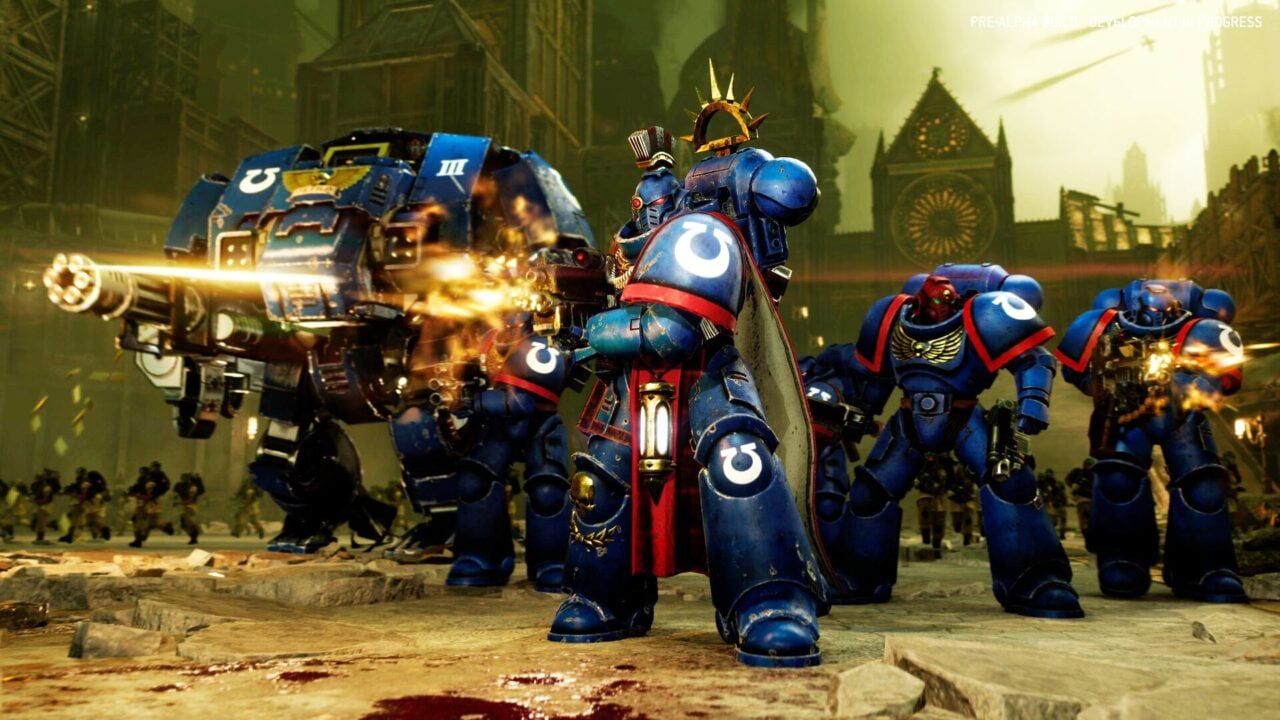
Creative Assembly's Total War: Warhammer 40,000 arrives as the studio's most ambitious strategy adaptation yet, translating Games Workshop's impossibly dense tabletop ruleset into a real-time tactical experience that mirrors the source material's legendary complexity without sacrificing playability.
The comparison to the tabletop game is unavoidable and intentional. Warhammer 40K's core appeal has always rested on its baroque rule systems, faction asymmetry, and the sheer cognitive load required to master even a single army. Total War: Warhammer 40,000 preserves this DNA. Unit interactions remain layered. Army composition demands strategic forethought. Positioning matters as much as raw stat advantages. The game rewards players who've internalized its systems while remaining accessible enough that newcomers won't bounce off immediately.
Creative Assembly faced a genuine design challenge. The studio built its reputation on large-scale battles and campaign-level strategy across historical and fantasy settings. Warhammer 40K demanded something different. The grimdark universe operates on different scale entirely. A skirmish between Space Marines and Necrons carries narrative weight the historical Total War games never attempted. Faction identity shapes everything. The Orks play fundamentally different than the Tau. The Chaos forces operate by entirely separate economic and tech rules.
The studio nailed this variety. Early impressions confirm that each faction plays like a distinct game rather than a reskinned variant. The Necrons control space with teleportation mechanics. The Tau leverage ranged superiority and mobility. Chaos forces corrupt terrain and generate resources through unholy means. This isn't Balance 101 game design. This is unashamed asymmetry, the kind that terrifies live-service designers but energizes hardcore strategy players.
The tabletop comparison cuts both ways. Fans who've spent years memorizing 40K rules recognize the authenticity immediately. The game doesn't dumb down the source material or streamline it into accessibility hell. That complexity translates directly into learning curve. Players must understand interaction matrices. They need to recognize unit roles and timing windows. They'll spend their first 20 hours making suboptimal decisions. They'll do it happily because the depth feels earned rather than artificial.
This approach carries real commercial risk. Casual players gravitate toward streamlined strategy games. They want clear feedback loops and intuitive systems. Total War: Warhammer 40,000 offers neither in abundance. The UI demands attention. The tooltip text runs deep. Veterans describe it as dense, even overwhelming. This game targets people who consider Crusader Kings III and Hearts of Iron IV comfort food.
The tabletop fanbase represents exactly that audience. They've already invested in learning 40K's rules. They've spent money on models. They've absorbed lore across 30+ years of publication. This game speaks their language directly. Creative Assembly designed not for mass market appeal but for specificity and depth. That's a bold choice in 2024.
The campaign layer adds another dimension entirely. Players manage faction objectives, technology trees, diplomatic relations, and resource production across a procedurally varied map. Battles emerge organically from strategic positioning. Late-game turns require planning multiple armies simultaneously while managing rear-line economy. It's Total War in full complexity, married to 40K's faction-specific mechanics.
This release marks a deliberate shift toward depth-first design in the strategy space. Creative Assembly rejected the premise that complexity alienates audiences. Instead, the studio bet that 40K's dedicated fanbase craves exactly this level of mechanical density and strategic granularity. Early returns suggest that bet paid off.