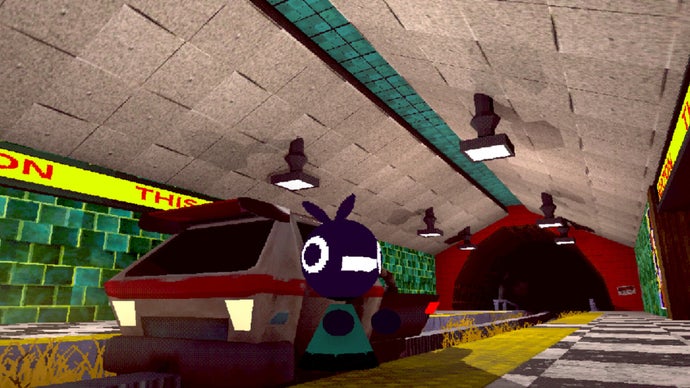
Cinderline arrives as a peculiar slice of indie oddity, positioning itself squarely within the beloved "little guy" adventure subgenre that has spawned countless memorable titles over the decades. The game casts players as a silent anthropomorphic bird traversing an ash-covered world aboard a tiny train, on a mission to gather ingredients for humanity's final s'more before everything ends.
The setup trades conventional narrative stakes for absurdist charm. Rather than saving the world or defeating a dark lord, your bird character pursues a comically mundane goal with apocalyptic undertones. The ash-covered setting suggests environmental collapse or some unspecified cataclysm, yet the tone remains light and whimsical rather than heavy-handed. This tonal balance between surrealism and comedic dread defines Cinderline's identity.
Mechanically, Cinderline operates as an exploration game where travel between towns becomes central to progression. The train serves as both transport and narrative anchor, connecting disparate locations and providing a sense of journey across the dying landscape. This structure echoes exploration-focused indie titles like Night in the Woods and Spiritfarer, which prioritize atmosphere and character moments over action sequences.
The anthropomorphic bird protagonist fits neatly into indie gaming's broader embrace of unconventional protagonists. Recent years have seen successful games starring everything from a fox in Night in the Woods to a ferret in Dinkum to a dog in Spiritfarer. Cinderline's silent bird joins this lineage, allowing players to project themselves onto a character without the anchor of dialogue.
The s'more quest functions as both literal objective and thematic throughline. Gathering marshmallows, chocolate, and graham crackers across multiple towns creates natural progression checkpoints while the "last ever s'more" concept carries weight. That finality permeates everything. You're not building toward salvation or renewal. You're chasing one last moment of simple comfort before the end.
The ash-covered world design suggests visual storytelling that eschews exposition dumps. Rather than explaining what happened, the environment communicates through aesthetic. Grey, desiccated towns and barren landscapes tell their own story. This approach resonates with players fatigued by cutscene-heavy narratives in mainstream releases.
Cinderline targets audiences who gravitated toward indie darlings like Kentucky Route Zero and A Short Hike, games that prioritize vibe and emotional resonance over challenge or spectacle. The combination of train travel, collection mechanics, and surreal worldbuilding creates something immediately distinctive in a crowded indie marketplace.
Release details remain sparse, but Cinderline's unique premise and tonal confidence suggest strong potential for cult appeal. The indie scene has proven receptive to exactly this kind of absurdist, character-driven experience. Games with a clear artistic vision and singular voice regularly find their audience, even when they resist traditional genre categorization.
Cinderline doesn't chase trends. It commits fully to its bizarre premise and lets that strangeness drive everything else. In a landscape where many indie titles chase accessibility and mainstream appeal, that commitment to weirdness reads as refreshing.